Equipage:
18th Century Chatelaines & Watch-Chains
An item worn at the waist, often carrying small sewing tools, pincushions, etuis, watches, and other objects, suspended from chains. The 18th century term for the assemblage of accessories seems to be “equipage,” rather than “chatelaine,” as we see in this description from Town Eclogues: Thursday; the Bassette-Table, by Lady Mary Wortley Montagu:
Behold this equipage by MATHERS wrought
With fifty guineas (a great pen'orth!) bought!
See on the tooth-pick MARS and CUPID strive,
And both the struggling figures seem to liue.
Upon the bottom see the Queen's bright face;
A myrtle foliage round the thimble case;
JOVE, JOVE himself does on the scissars shine,
The metal and the workmanship divine.
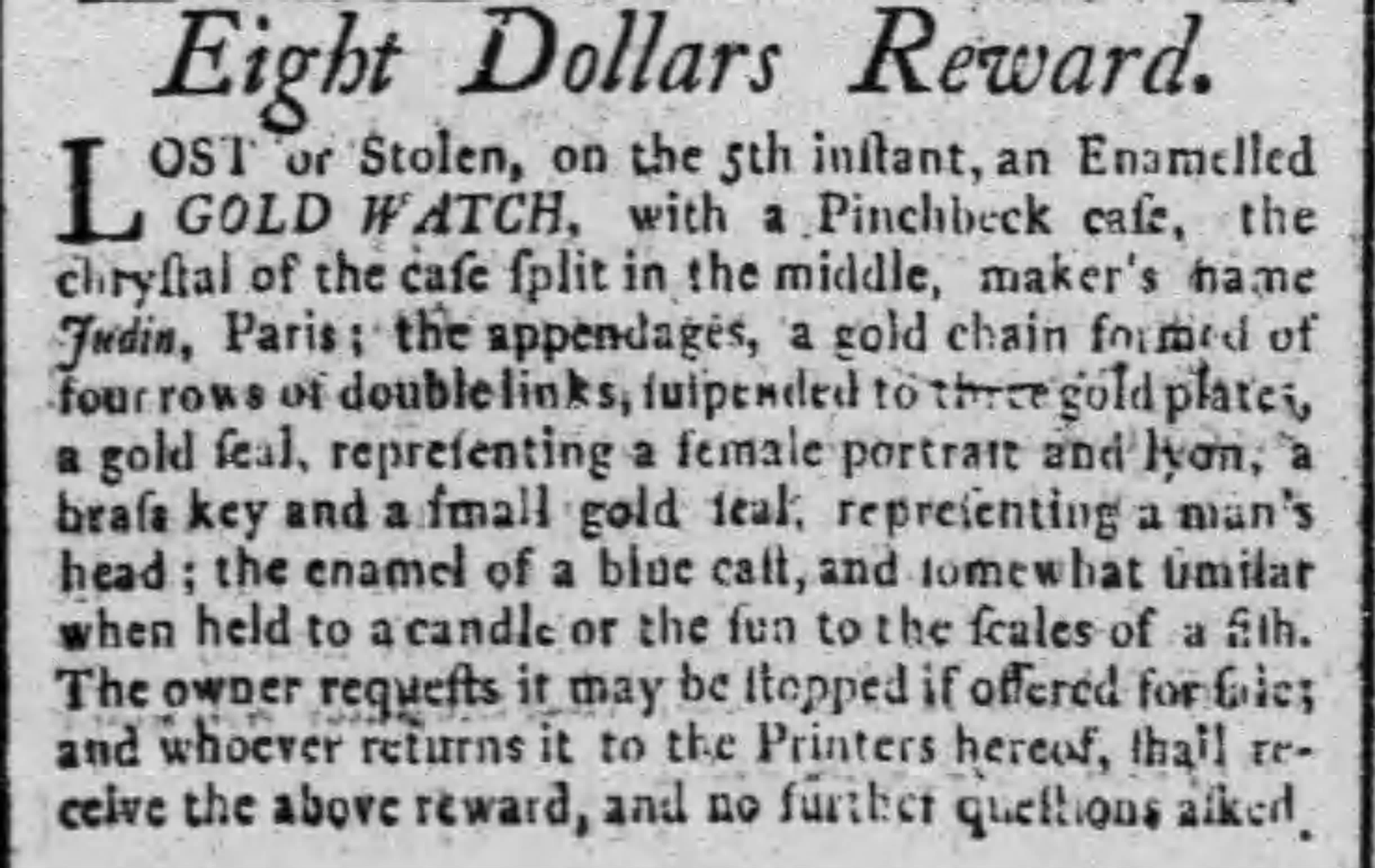
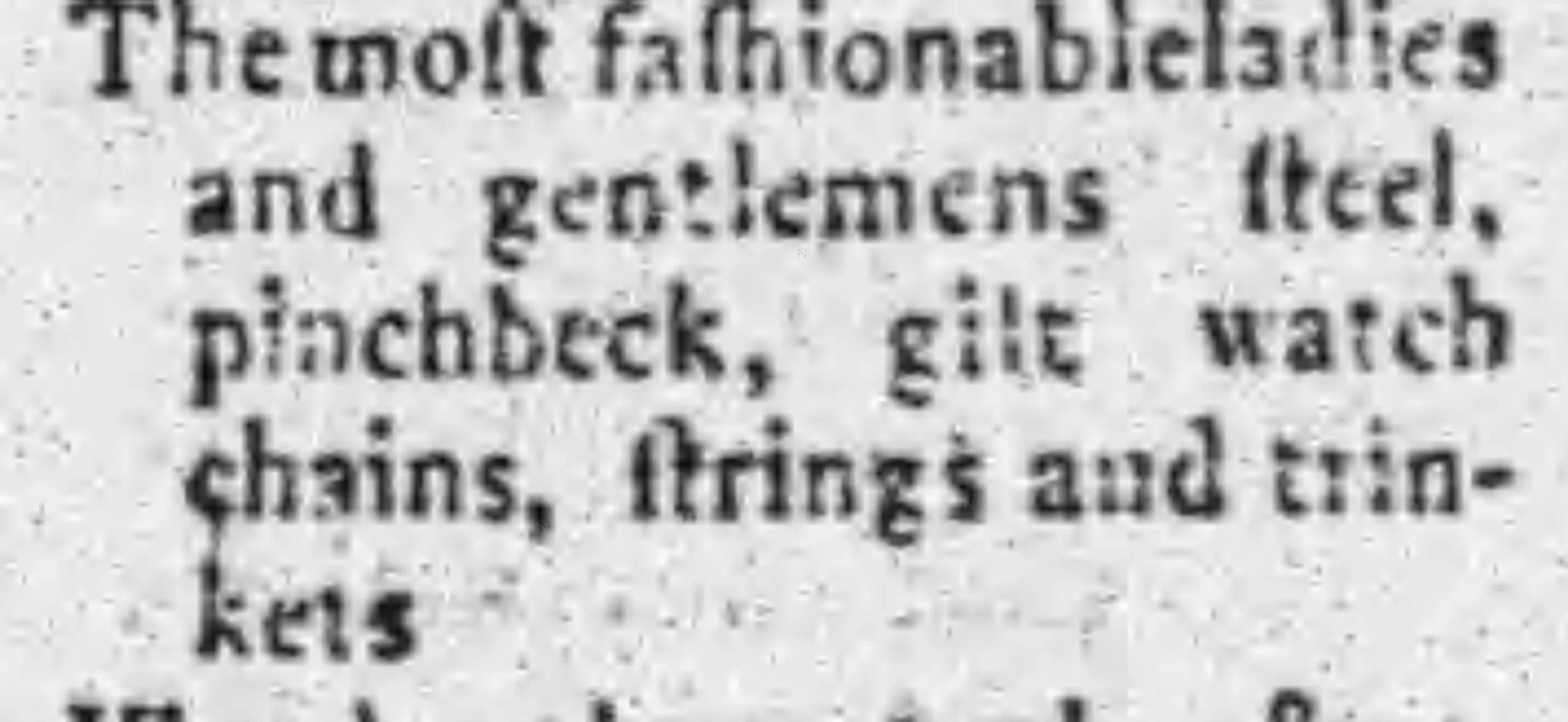
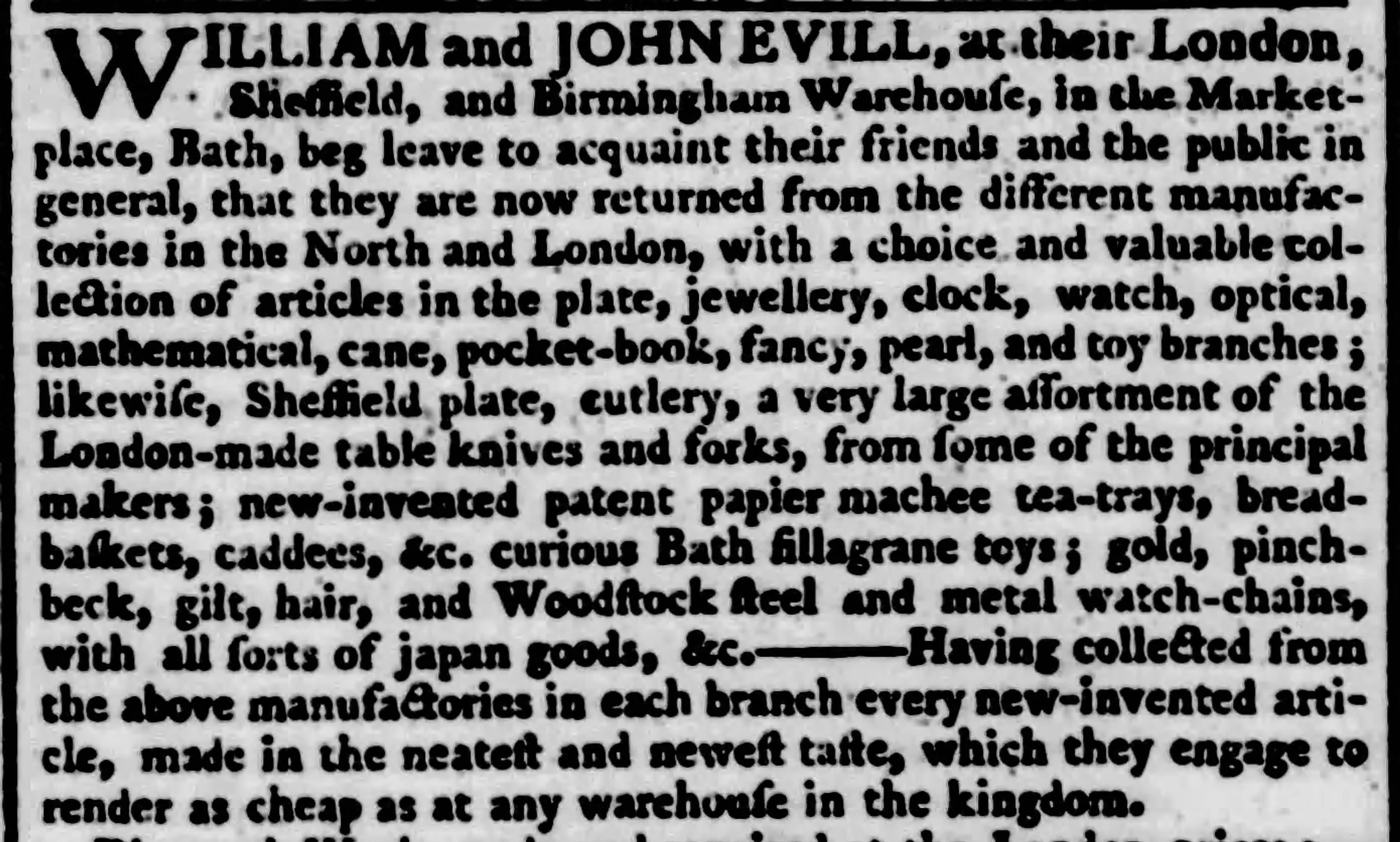
More examples of what we call a “chatelaine” being called called an “equipage” in newspaper advertisements: The Gloucester Journal, November 16, 1767; Boston News Letter, April 28, 1768; Poulson’s American Daily Advertiser, January 10, 1784
And in trials in the Proceedings of the Old Bailey: January 12, 1722; April 24, 1723; July 9, 1740; October 20, 1773
However, not every reference to an “equipage” is what we’d call a “chatelaine.” “Equipage” is more of a generic term that can apply to an assortment of stuff. The Dictionary of Traded Goods and Commodities, 1550-1820 points out that it was “an umbrella term that was applied to almost any set of APPAREL or equipment. For example, one advertisement was for 'elegant Tea and Coffee equipages, painted after the Dresden manner' [Newspapers (1780)], another by a 'Coach & Harness Maker' was just for 'all sorts of Equipages in the Compleatest manner' [Tradecards (18c.)], leaving it to the reader to deduce what might be included.”
Additional Resources
This site contains affiliate links for which I may be compensated
Equipages, chatelaines and macaronis and Mystery animal revealed
Chatelaines: Utility to Glorious Extravagance
Keeping Track of Time: Georgian Watch Chains, Equipages, Fobs, and Chatelaines
How the Watch was Worn: A Fashion for 500 Years
Antique Needlework Tools and Embroideries
Chatelaines are … toys?
While the word “toy” could refer to children’s playthings, the term was used more broadly as a category of goods that included ornamental objects (including equipages), as noted in The Parent’s and Guardian’s Directory (1761):
We are here ſpeaking of thoſe ſhop-keepers, under this denomination, who not only ſell all ſorts of Toys made for the diverſion of children, but a great variety of ornamental curioſities; as gold Snuff-boxes, finely adorned with precious ſtones, paintings, or ſhells, with ſervices of chaſed Plate, diamond and paſte Ear-rings, Buckles, Buttons, and Studs, ornamental china, &c. and a vaſt variety of curious Trinkets.
George Willdey’s trade cards — one from c. 1710 and one from 1717 — include illustrations of the chatelaines he sold at his Great Toy Shop, along with many of the other goods he made and sold. His earlier trade card offers a description:
HE alſo Sells (as Cheap as the Makers) all Sorts of Cutlers Ware, and curious Toys in Gold, Silver, the True Bath and other Metal, Mother of Pearl, Agat, Amber, Tortoiſe-ſhell, Ivory, and fine Woods, as Snuff-Boxes, Caſes of Knives, Forks and Spoons, Fine Tweezer and other Caſes, Fine Equipages, Right Pearl, True French and other Necklaces, Pendants, Rings set with True and other Stones, Chains, Hooks and Strings for Watches, Buckles, Buttons, and whatever is Curious in theſe Kinds.
Several of the examples below — those featuring watches as the central object — more properly ought to be called watch-chains or watch-strings.
Extant 18th century chatelaines
Met 32.100.316, gold, enamel, and diamonds, British, 18th century
Louvre OA 8027, a watch and chatelaine in silver and gold with diamonds, jasper, and rubies, London, c. 1725-1750
V&A M.433 to B-1911, England or Germany, c. 1730; “Pinchbeck chatelaine chased with figures probably representing Apollo and Minerva, incorporating scissors and pen” with shagreen case
V&A M.275-1975, England, 1730-1735; “Pinchbeck chatelaine incorporating scissors case, needle case, etui and two thimble cases”
Colonial Williamsburg 1952-601,A, a watch with chatelaine, London, 1740-1741; “Paircase watch; pinchbeck outer case with repousse scene of classical figures; gold inner case; dust cap; verge movement with pierced silver cock, diamond capstone, and squared baluster pillars. Pinchbeck chatelaine with repousse and pierced ornament and two pendants holding watch key and two seals. Survives with shaped, black shagreen case lined with red velvet.”
London Museum 62.121/99, c. 1740-1770; “This chatelaine is composed of a decorative clasp, from which are suspended a chain of three decorative plaques with hooks attached; and two small flasks for holding perfume or thimbles … This example is decorated in the rococo style, with openwork scrolls and flowers.”
Louvre R 418, a watch and chatelaine with floral enamel plaques, 1735-1750 France
London Museum A15627, steel chatelaine with enamel plaques
Met 17.190.1450, a watch (made by John Rich) and chatelaine in agate, gold, diamonds, rubies, and enamel, London, c. 1740
V&A M.307-1919, a gold chatelaine, England, c. 1740-1760
London Museum A16348, copper-gilt with enamel (Limoges?) decoration
Philadelphia Museum of Art 1964-130-1, a silver chatelaine hook, Philadelphia, 1748
MFA 51.653, equipage (chatelaine) with central etui and two appendages, England, c. 1750; “In this example, the belt hook and dependent plaques are cast in relief and feature Erotes figures and goddesses in Classical garb arranged in asymmetric cartouches. Flanking these elements are hinged, oval boxes made of hammered sheet metal decorated with ornamental swags and shells. Now empty, the boxes may once have held a thimble and thread. The main component of the equipage is the etui which is suspended from a swivel hoop and embellished on both sides. Depicted on the front is a seated woman in an idyllic garden reading a book while Minerva, Roman goddess of wisdom and patron of the arts, is shown seated in an outdoor setting on reverse. Inside the etui are various gilt-metal implements, including a miniature spoon; a folding knife whose handle is adorned with raised-relief flowers; a pick; and a small scoop. Several utensils are now missing and it is likely that one was a tiny fork.”
Louvre OA 6236, painted enamel and gold chatelaine with watch, Paris, mid-18th century
Louvre OA 8394, a gold watch and chatelaine covered in roses, Paris, 1750-1752
Met 35.102a-h, gold and moss agate, British, c. 1750-1760
V&A E.897:72-1988, design for an enamelled and stone-set chatelaine, c. 1755
V&A M.4:1 to 5-2004, gold, chased and embossed, London, 1755-1756; “Gold chatelaine from which are suspended a watch, an étui for snuff containing a spoon and a watchkey, and a further étui … The chatelaine and the watchcase are decorated with figure scenes. On the chatelaine there are scenes from the life of King David as described in the Bible. On the watchcase is a scene of Angelica and Medoro carving their initials in a tree, taken from the epic Orlando Furioso by the Italian poet Ludovico Ariosto.”
Manchester 1953.357, a gilt metal repousse chatelaine, 1755-1760
Powerhouse Museum A4959, repousse copper finished in gilt, France, c. 1760
V&A M.16-1932, a gold watch and chatelaine set with topazes and diamonds, Paris, c. 1760
V&A E.897:78-1988, design for the upper section of a chatelaine, Paris, c. 1760 (see also V&A E.897:79-1988 for coordinating watch)
Examples at the Musée Hyacinthe Rigaud: 4-2, 8-2, 14-2, 15-2, 17-2, 18-2, 24-2
V&A LOAN:GILBERT.336-2008, a chatelaine and watch with gold and enamel, Vienna, c. 1760; “Suite comprising snuffbox, etui, chatelaine and watch. The oval snuffbox is enamelled en plein with six opaque reserves of flowers painted against a mauve ground, bordered by wreaths of translucent green foliage and blue flowers, all over chased radiating lines and chevrons; a concealed hinge runs across the rear of the cover and the box has a flaring thumbpiece. The etui is of flattened oval section, enamelled en plein with four reserves of fruit, flowers and exotic birds within similar wreaths of translucent green and blue; it contains a knife with one gold and one steel blade, a snuff spoon, a toothpick, an earpick, a propelling pencil, scissors and ivory tablets. The chatelaine is formed as a spray of flowers enamelled in opaque colours with translucent green foliage and tied with translucent blue ribbon in three hinged sections from which hangs a watch painted en suite. Its white enamel dial has Roman hours and Arabic minutes and blued steel hands.”
Philadelphia Museum of Art 1975-140-144, chatelaine with etui, enamel on copper, England, c. 1760-1765
V&A M.261B-1975, England, 1760-1770; “Gold chatelaine decorated with transluscent dark blue enamel flowers and riveted to pinchbeck”
V&A E.897:53-1988, designs for neoclassical chatelaines, Paris, c. 1760-1780
Met 24.80.61a-k, nécessaire and châtelaine in enameled copper, Staffordshire, c. 1760-1780
V&A E.897:74-1988, a design for chatelaine and étui, Paris, c. 1765
Met 49.93.9, a design for an enameled watchcase and chatelaine with mythological figures, c. 1766 (?)
Louvre OA 8390, a gold chatelaine with painted enamel, London, 1767-1768
V&A C.492:1 to 7-1914, gilt metal with painted enamel, West Midlands, c. 1765-1775; “The main element of this chatelaine is an étui, a container fitted with a penknife, a bodkin for threading ribbon through lace, a combined nail-file and tweezers, and a combined toothpick and earscoop. Because these items are a selection from a fairly standard list of étui equipment, it is possible to tell from the shape of the remaining empty slot that this étui once also contained a hinged pair of ivory memorandum leaves (these could be written on, using a pencil). The small egg-shaped screw-top containers known as breloques may have been for small breath-freshening sweets.”
Louvre OA 8607, gilt chatelaine with enamelled pictures of ladies, a watch, and charms, Paris, c. 1767-1800
Louvre R 412, a watch and chatelaine, gold with diamond and enamel, Paris, c. 1767-1800
Louvre OA 8606, a watch and chatelaine, London, 1768-1770
Met 17.190.1439 a-c, a watch and chatelaine, London
V&A M.61-1962, a steel chatelaine with colored gold decoration, England, c. 1770
Louvre OA 8028, a gold and silver and enameled watch and chatelaine, France, 1770
MoL NN2742, c. 1770-1790
Powerhouse Museum 86/1673 and 86/1674, chatelaines with jasper/cut steel mounts, Wedgwood, England, c. 1770-1790
Met 32.75.33, a gold watch and chatelaine with agate, diamonds, sapphires, rubies, emeralds, and carnelian, Regensburg, c. 1775
British Museum 1978,1002.414.a, France, c. 1775-1776; “Three coloured gold and silver chatelaine with applied ornament on the hook-plate in the form of symbols of love, Cupid and doves at an altar with a flaming heart, four cartouches decorated with trophies terminating in a suspension hook with a watch, others with watch-keys, a minute compartmented, engraved writing case decorated with baskets of flowers. Inside the case are ivory writing tablets and a discharge mark. The belt-hook and plate are marked fully marked.”
London Museum 27.17/28, c. 1775-1799
British Museum 1979,0101.1, London, c. 1777-1778; “Gold and enamel cased cylinder watch with dumb quarter-repeat and en-suite chatelaine … Chatelaine with medallions of Roman altar scene, head of Hercules, head of Mercury and a swan, all in neo-classical style.”
Louvre OA 6229, a watch and chatelaine in gold with jasper and agate, Paris, 1778-1779
British Museum 1979,0101.1, a gold chatelaine and quarter-repeating watch, both with painted enamels; “purchased by the eminent physician Sir James Napier in 1779 for £63.10s”
Philadelphia Museum of Art 1964-130-2, a chatelaine hook, Philadelphia, 1780
London Museum 27.17/29, c. 1780
V&A M.268-1975, silver and gold chatelaine with marcasite and red glass pastes, Switzerland, c. 1780
V&A M.60-1962, steel chatelaine with colored gold decorations, Tula, c. 1780
V&A 414:1296-1885, cut-steel beads with blue Wedgwood jasperware and glass, Etruria, c. 1780-1800
V&A M.25-1969 cut steel chatelaine with jasper plaques, Soho, 1785
Met 1984.1175.1 and 1984.1175.4, designs for etuis and chatelaines
Historic New England 1948.128, London, c. 1797; “Gold colored metal (possibly pinchbeck) chatelaine with two miniature paintings on ivory, belt hook is set with an oval miniature depicting a woman in a white dress holding red flowers sitting by an urn and a child or cherub is sitting behind her, the second miniature hangs from three chains from the hook and depicts a woman standing in front of a marble bust on a stand, the second miniature supports four shorter chains (one missing) terminating in loops for the attachment of objects, both miniatures are framed by a row of faceted cut steel beads, cut steel beads are also set on the chains.”
Met 2011.580.1, a chatelaine with a calendar, steel and enameled gold, France, probably late 18th century
Met 32.75.34 ab, gold, enamel, and steel, Swiss (?), late 18th century
British Museum 1978,1002.1167, silver with foiled pastes, England, late 18th century
British Museum 1978,1002.1119, cut-steel, England, late 18th century
British Museum 1978,1002.404, late 18th century. “Three-coloured gold chatelaine with five suspension hooks bearing needlework implements, a pair of scissors with a sheath on a chain, a thimble in a case, a screw-top lid for a missing needle-case, and two egg-shaped compartments with hinged lids. The hook-plate is decorated in applied coloured gold with a scene of a dog mourning at a tomb. The other elements are decorated with applied flowers and trophies on an engraved ground. Three oak leaves and mark on the hook.”
Elsewhere on this site: hanging pincushions and scissors as worn by working-class women, often from a ribbon tied to a waistband. (There are also pages on seamstresses & tailors, sewing kits, housewifes/sewing rolls, work bags, and etuis.)
A Harlot's Progress, plate 1 and plate 3, by William Hogarth, 1732
Trade card of George Willdey, scientific instrument maker, c. 1707-1748; look for the object in the lower right-hand corner
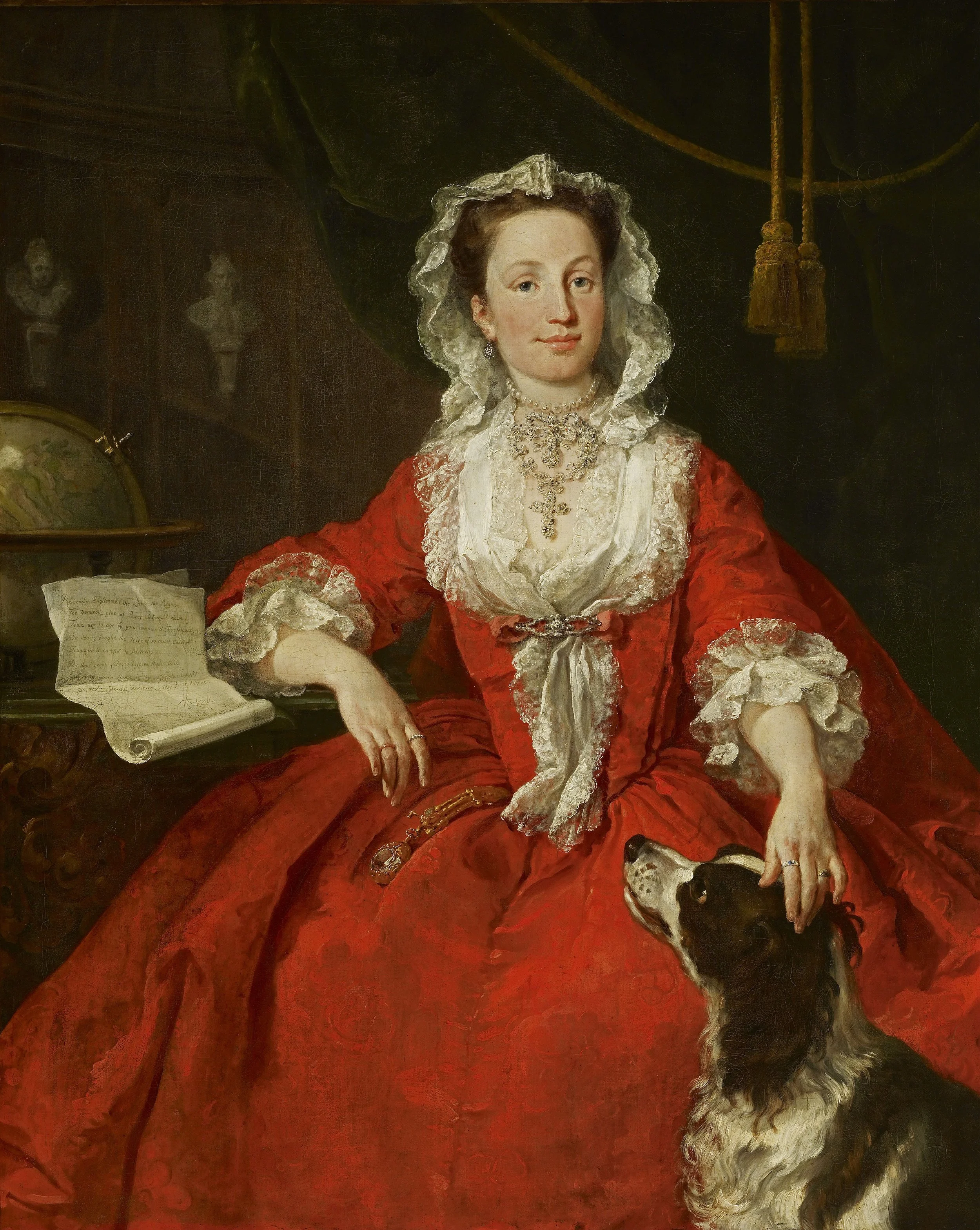
Miss Mary Edwards by William Hogarth, 1740
A lady on her day bed by François Boucher, 1743
May by Thomas Burford, 1745
William Wollaston by Thomas Gainsborough, c. 1759
Charles Tudway by Thomas Gainsborough, 1765
Madame de Saint-Amarante by Louis Carrogis Carmontelle, c. 1770
A young woman with a watch just visible below her jacket in La Pharmacie Rustique (also here), 1775
Age and Folly, or the Beauties, 1776
A girl buying a ballad by Henry Walton, 1778
Jolie danseuse vetue d'un Caraco …, 1779
Two ladies, one holding a fan, and the other a rose
George III by Thomas Gainsborough, 1781
Sir Harbord Harbord by Thomas Gainsborough, 1783
Joshua Walker of Clifton House by John Russell, c. 1784
Egbert van Drielst by Jan Ekels, c. 1785-1793
Dionys Eliasz van Nijmegen by Dionys van Nijmegen, 1790
A bundle of straw, 1795
Portrait of a lady reading a book by James Millar, 1796