18th Century Rocking Horses
The rocking horses depicted in 18th century portraits of young children reflect the tastes and budgets of more affluent families, but illustrations and other descriptions indicate that they were enjoyed by the children of more modest means as well. They would likely have been handmade; while some 18th century toys were mass-produced, rocking horses didn’t enter into mass production until the 19th century.
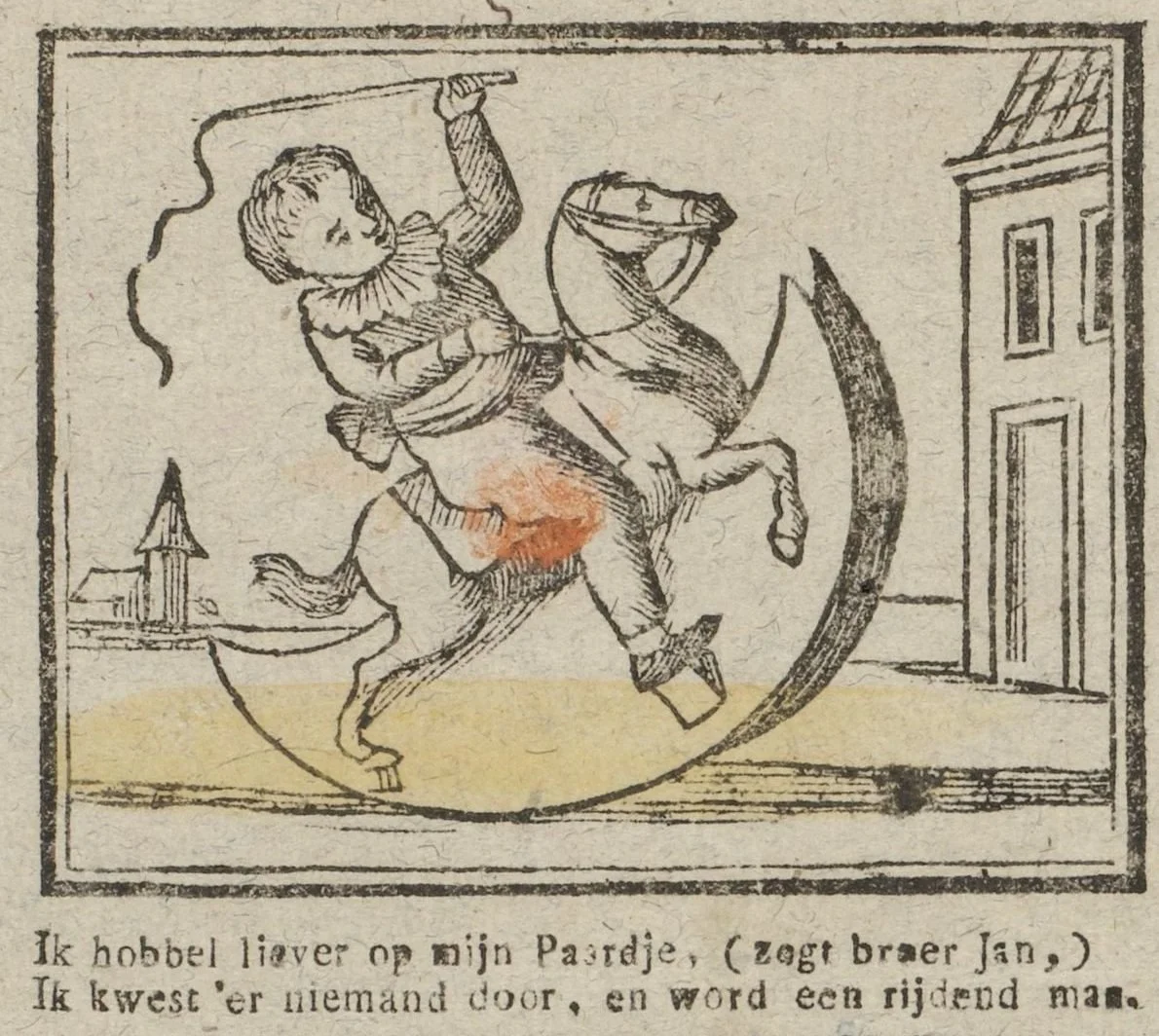
“By the 18th century, the solid rockers [on rocking horses] gave way to lighter products as elegantly carved legs attached to long, narrow bows,” notes the Strong Museum of Play, though this early 19th century image shows that solid rockers continued to appear. The Old Stone Fort says: “In the early 18th century, rocking horses were being made in America as well as Europe. Although most of these wooden horses were crudely made, wealthier families had handmade leather saddles, real horsehair tails and other elaborate accessories. By the late 18th - early 19th century, the rocking horse evolved into a work of art. Woodworkers were sculpting full-bodied rocking horses, making them more life-like than ever before.”
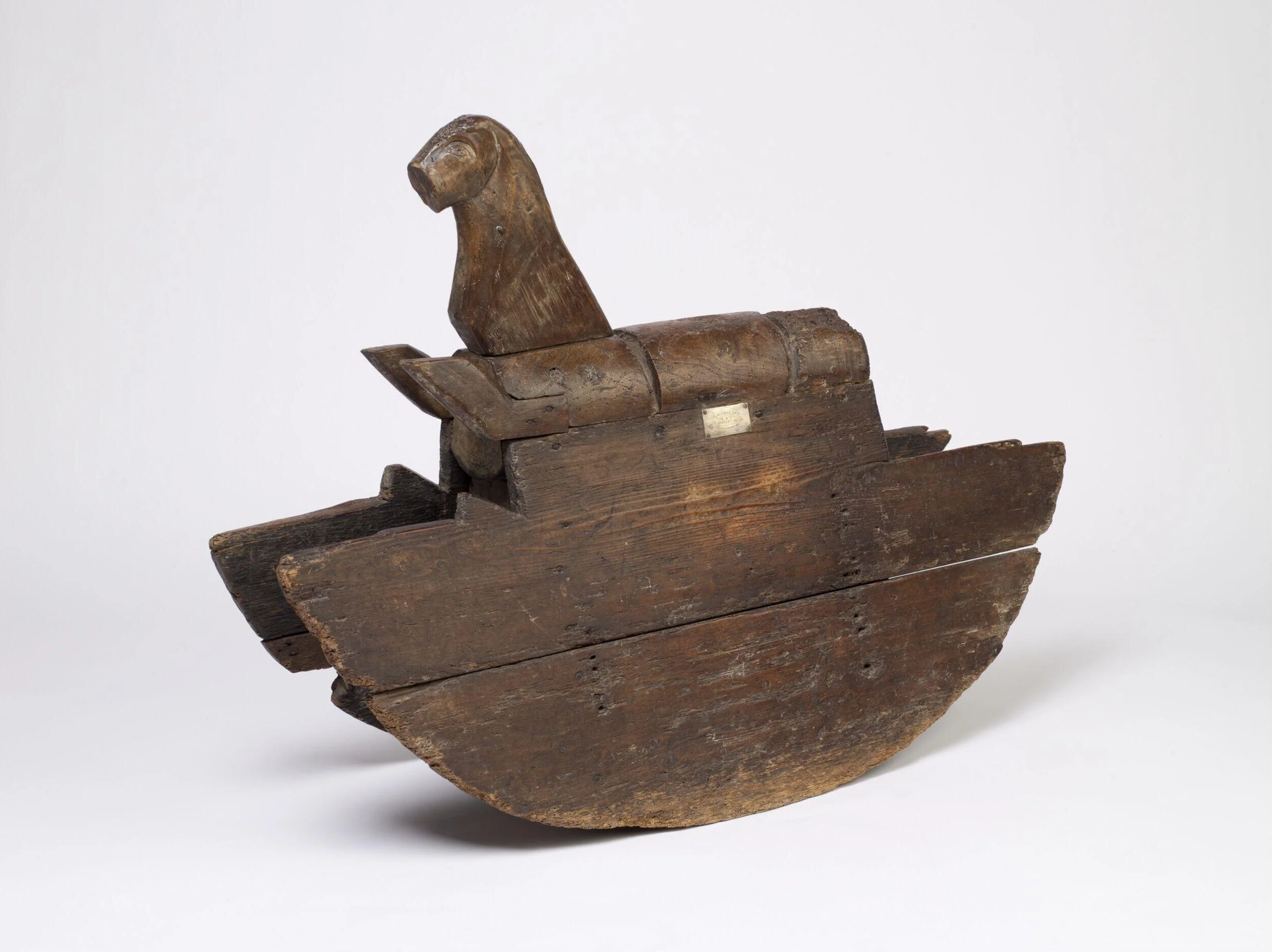
V&A B.1-2006, a wooden rocking horse made c. 1610. “This rocking horse is one of the oldest surviving in the world. It has been suggested that it had belonged to King Charles I, though there is not enough evidence to prove or disprove this.”
© Victoria and Albert Museum, London
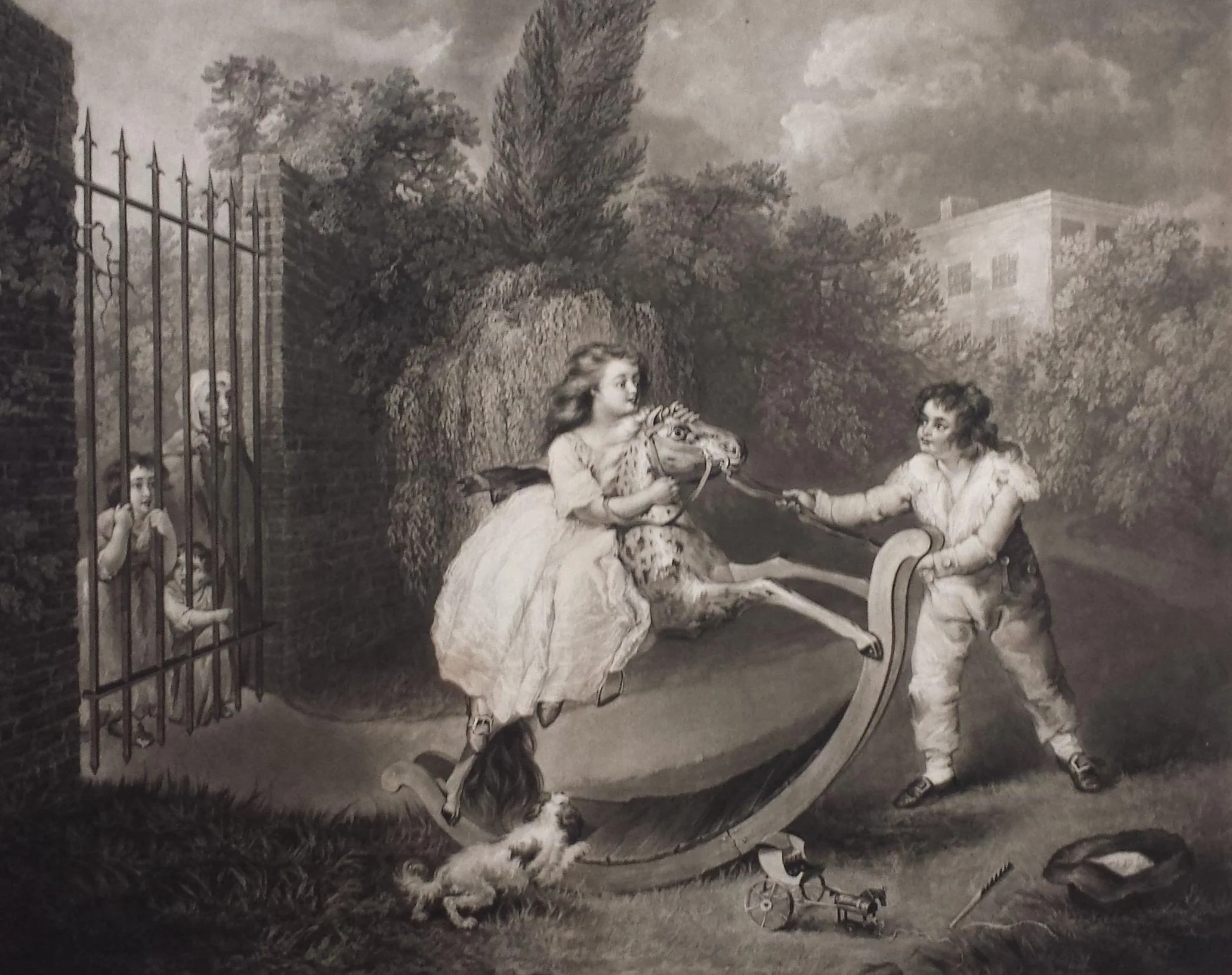
The Rocking Horse, 1793. Here, a particularly fine rocking horse — like this c. 1840 example, probably hand-carved and covered in animal hide — is the plaything of well-to-do children in a fine home, while poorer children look on in envy.
© The Trustees of the British Museum. Shared under a Creative Commons Attribution-NonCommercial-ShareAlike 4.0 International (CC BY-NC-SA 4.0) licence.
Louis Philippe Joseph by François Boucher, c. 1750; is the kitten in his lap a toy, too?
More of a wheeled toy: Children playing with a hobby horse by Joseph Francis Nollekens, c. 1741-1747
Infants and their wooden horse, 1756
Kinderspiel, c. 1751-1772
Two children with a toy horse by Georg Friedrich Weitsch
“Laſt Week a Preſent of a curious Rocking-Horſe was made to his Royal Highneſs the Prince of Wales; the Saddle of which was finely embroidered with Silver-Lace, and the Stirrups of ſolid Silver.” (The Derby Mercury, November 2, 1764)
Willem Borski by Martinus Houtman, 1767
Children at play in Des Elementarbuchs für die Jugend illustrated by Daniel Chodowiecki, 1770
The Sick Child by Jacobus Buys, c. 1778-1779
Master Billy’s hobby-horse, or his triumphal entry into Downing Street, 1784
Women ironing, c. 1786-1800
“TIMBER MERCHANTS, ROCKING HORSE MAKERS, and OTHERS … ABOUT FITY LOADS of LIME, CHESNUT, OAK, and ELM TREES, and ELM STOCKS, and PEAR TREE … which will be put up in ſmall Lots, ſuitable to the Trade.” (The Times, October 20, 1789)
The First Hobby-Horse by John Condé, 1792
The Rocking Horse, 1793
The children of Hendrik Gijsbert Knoops by Rienk Jelgerhuis, 1798
Advertisements in newspapers published in 1798 for shops in England selling rocking horses, including Grosvenor's Toy Rooms and C. Wigley
A boy and his rocking-horse by Traugott Georgi, c. 1798-1838