Stick-Horses & Hobby-Horses
in the 18th Century
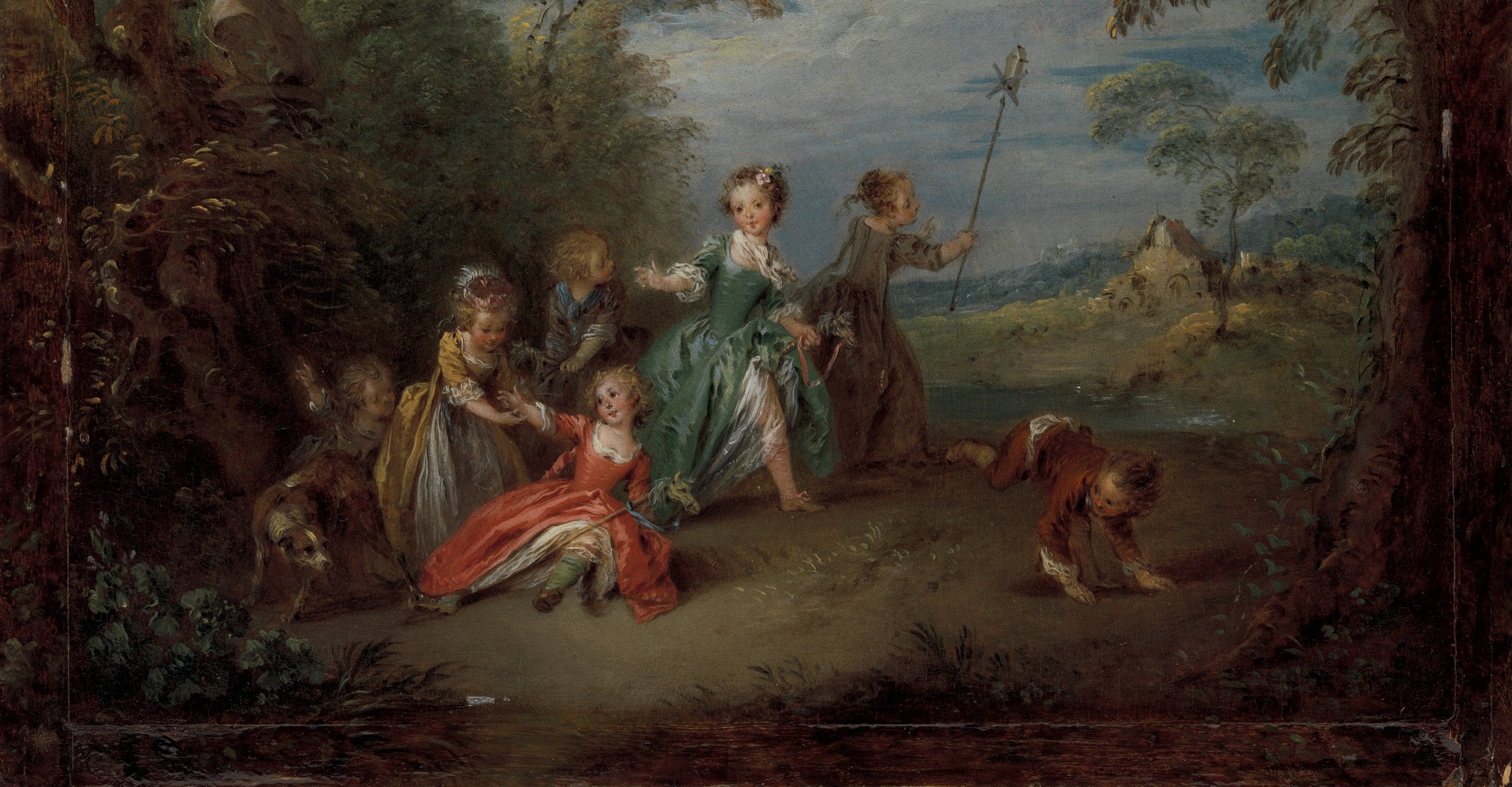
Children in the 18th century used stick-horses (sometimes called “hobby horses”) to engage in pretend-play for many equestrian scenarios.
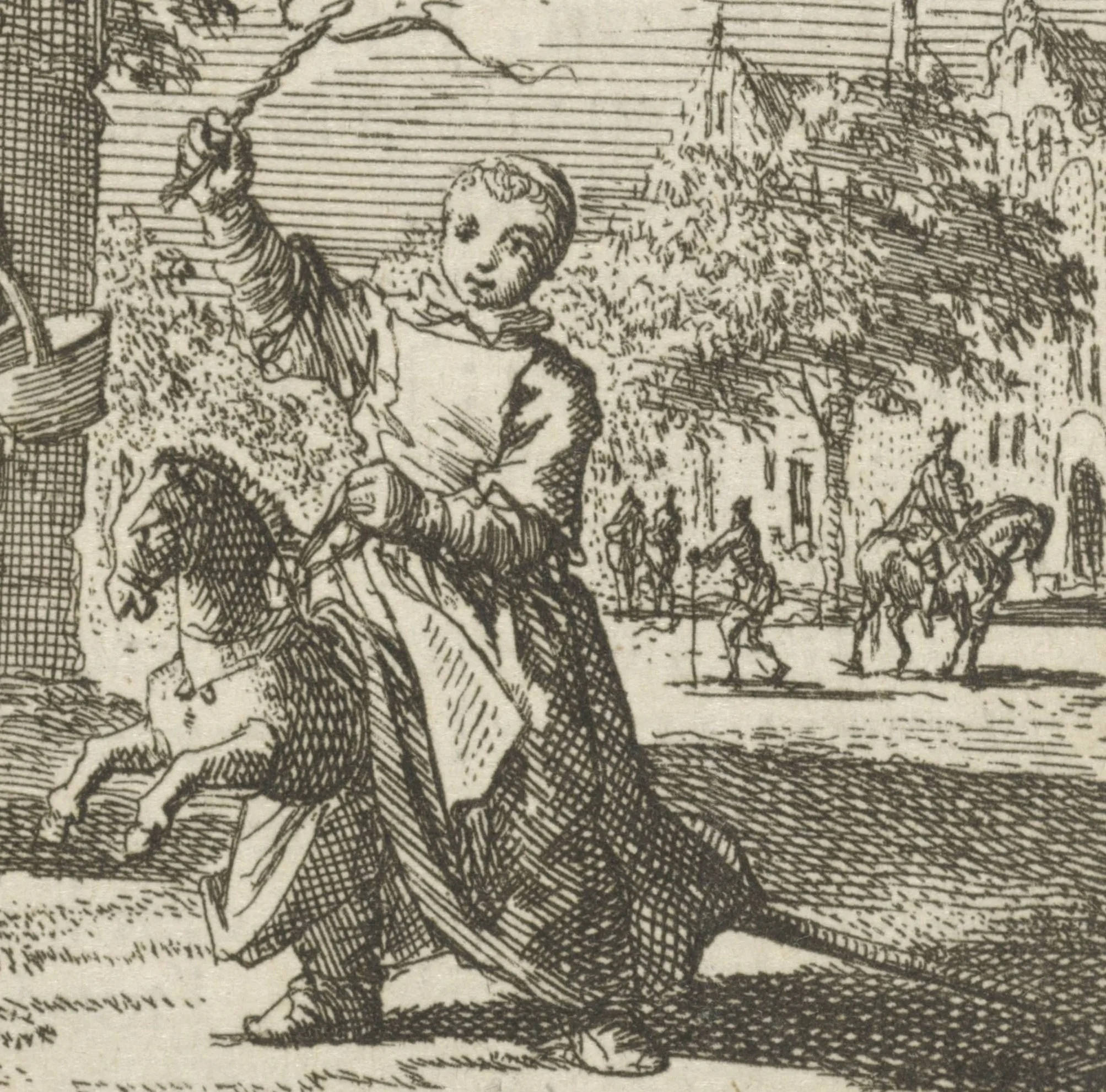
These toys could be as simple as a stick or a walking-stick repurposed for romping around, but wealthier children might also be given more elaborate hobby horses — not just with the horse’s head on a stick, but perhaps its chest and forelegs too,
Medieval children played with stick-horses while carrying pinwheels or scopperels like lances for jousting knights.
While similar pinwheels and toy windmills existed in the 18th century, the toys held by hobby-horse-riders are more like small whips, perhaps made for playing with spinning tops.
Sophie Eleonore von Sachsen with her grandsons by Johann Spilberg, 1667
Het Houte Stokpaard by Jan Luyken, 1712
La famille en promenade by Philip Mercier, 1725
The Golden Age by Jean Baptiste Joseph Pater
Scenes of family life by Johann Peter Wolff, c. 1746-1755
The children of Jan Maximiliaan van Tuyll van Serooskerken and Ursulina Christina Reiniera van Reede, c. 1746-1769
Das Stecken-Pfert, die Dock und andtre Spiel-wercks-Sachen …, c. 1750
Kinderspiel, c. 1751-1772
Jacobus Ursinus Grevenstein by Adriaen Thim
Christian August Graf zu Solms-Laubach with his grandson Friedrich Wilhelm Fürst zu Solms-Braunfels by Anton Wilhelm Tischbein, 1762
Kitchen interior with a young woman cleaning fish and a boy with a hobby horse by Abraham Hendrik van Beesten, 1769
Children at play in Des Elementarbuchs für die Jugend illustrated by Daniel Chodowiecki, 1770
Anna Catharina Pichot and her younger brother by Pierre Frédéric de la Croix, 1775
Boy on a hobby-horse, Japan, 1786
The family of Berend Hendrik Bentinck, c. 1790
Portrait of an unknown boy with a stick horse, last quarter of the 18th century
Milkmaids in St. James’s Park, Westminster Abbey Beyond by Benjamin West, c. 1801