18th Century
Women’s Hats
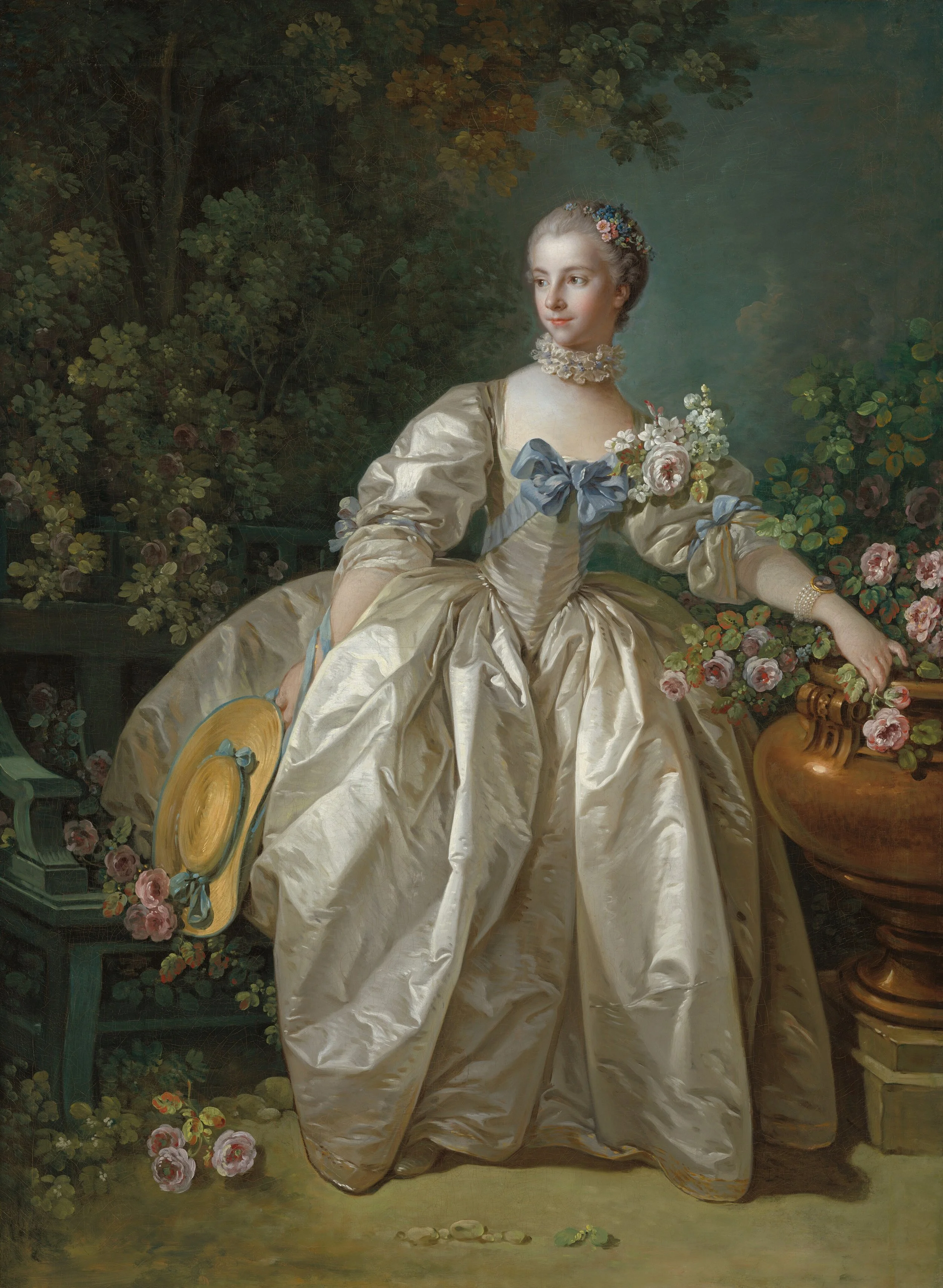
Madame Bergeret by François Boucher, c. 1766
Courtesy National Gallery of Art, Washington
Additional Resources
This site contains affiliate links for which I may be compensated
On Straw-hats, Kalm’s Account of His Visit to England
Tutorial: How to turn a straw sunhat into an 18th century bergere
18th Century Flat Hats – Covering a Hat Blank With Silk
Fashion: The Collection of the Kyoto Costume Institute
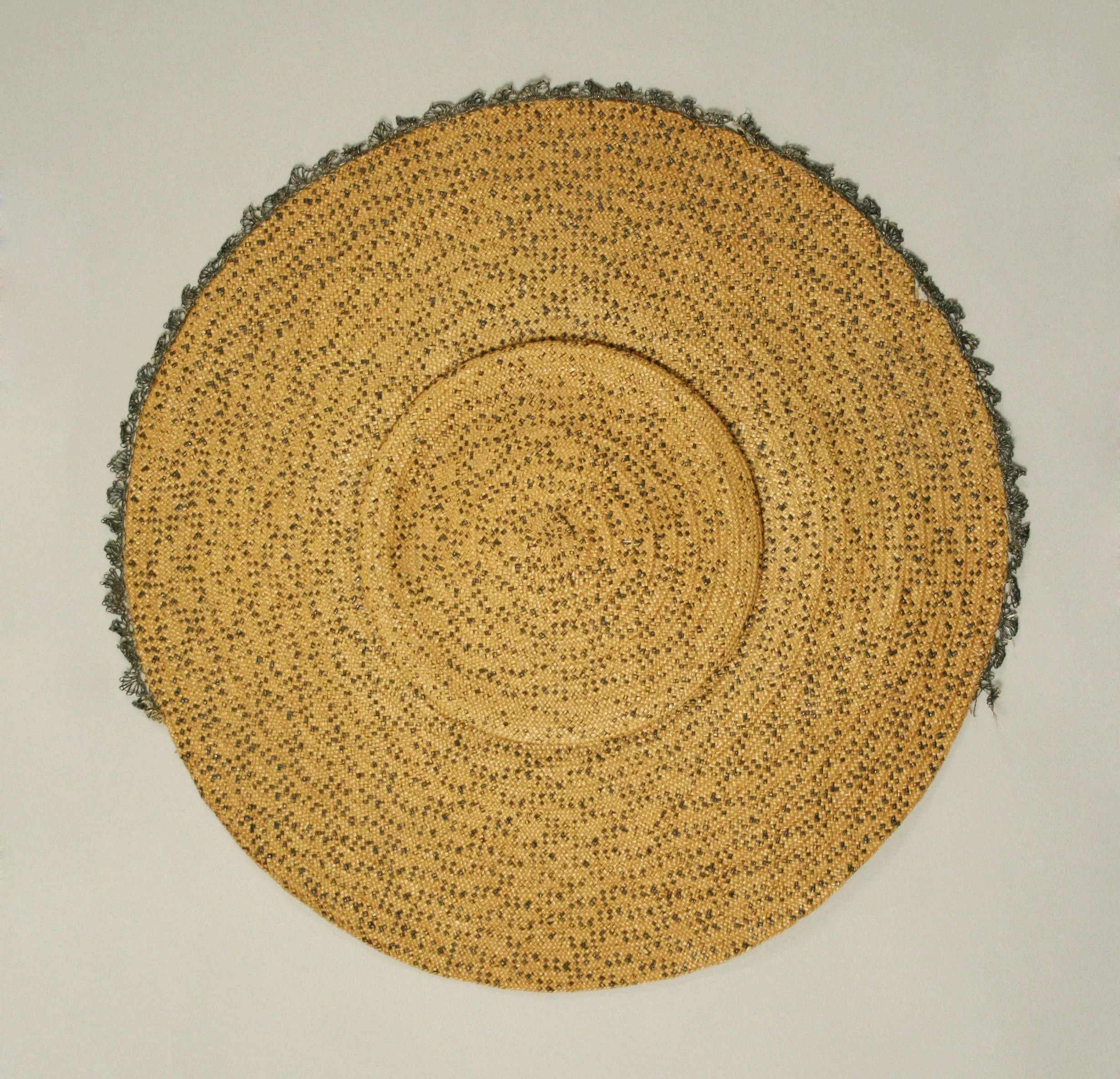
Extant 18th century women’s hats
Colonial Williamsburg 1969-265,1, “woven in an intricate pattern of linked oval medallions enclosed in diamond lozenges which converge at center crown to form a five-pointed star,” worn in England c. 1675-1725; see also Met 1988.342.1a-c
Met 1998.230, wool and silk, Germany, c. 1720-1750
Met 2006.588, silk (covered straw hat?), Italy, c. 1720-1750
MFA 43.1831 and MFA 43.1835, painted straw bergère hats, Switzerland, c. 1730-1800
Colonial Williamsburg 1953-868, horsehair and bast fiber, England, 1745-1775
LACMA M.82.8.8, a bergére in silk, wood, paper, and silk tulle, England, c. 1750
Royal Albert Memorial Museum 28/1969, a bergère hat made of paper with a silk lining, ribbon, and lace trim, England, c. 1750
Met C.I.69.15.1, straw bergére, Britain
MFA 48.1833, straw bergère with straw appliqué, France
MFA 43.1613, silk hat trimmed with straw appliqué, France (?)
Met 13.49.35, Britain
London Museum A12642; “Woman's hat, woven in one piece, of un-dyed split cane lined with silk. The construction of the hat follows basket making techniques, using split cane spokes radiating out from centre top crown. New spokes added at union of c4rown and brim and at the two rows of brim pattern. Underside of hat brim lined with two pieces of cream silk stitched together and the inside of the crown in red silk. Brim edge covered with a red/green silk brocade fabric which includes strips of split cane or straw.”
National Trust 1349841, chip hat with cotton print lining, c. 1750-1760
London Museum A13031, possibly made in Switzerland, c. 1750-1770; “Woman's Bérgère-style flat straw hat with shallow crown, wide brim and trimmed with plait of straw braid around crown; painted yellow except inside crown.”
V&A T.90-2003, Britain, c. 1750-1770; “feathers of common origin, such as those from cocks or guinea fowl, dyed in a variety of colours for a vivid effect.” A similar hat is worn by a girl in V&A 833-1873 (“Head of a Girl Wearing a White Hat” by William Hoare) and A School for Girls by Philip Mercier.
V&A 1750-1774, England, c. 1750-1774: “Woman’s hat of woven straw, covered with black silk taffeta and lined with white silk. The sides of the crown are of black ribbed silk.”
MFA 38.1328, English or French straw hat, c. 1750-1775
Met 1984.140, raffia hat trimmed with silk, Britain, c. 1760; good detail of the inside of the hat, where the ribbons are attached
Paris Galliera 1994.234.3, c. 1760-1770; “Blue silk taffeta, blonde straw, straw lace appliqué”
Colonial Williamsburg 2018-227, a silk-covered straw hat, Europe/England, c. 1760s; “Wide brimmed hat with small, shallow crown of plaited straw. The hat top has been covered in a pattern woven red silk with small floral buds and circles halved by two different patterns within the shape resembling stylized acorns in groups of three. At the crown, the silk appears to have been gathered and sewn at the top, after which a circular 4.25 inch piece of the same silk was attached with the raw edges turned under to create the finished appearance. Around the perimeter of the hat crown is a length of cream silk plain woven ribbon gathered and made into 10 loops with a bow at back. The underside of the hat is covered in a cream plain woven silk. The interior crown, the construction work is exposed, showing the cream silk cut into eight points and adhered to the straw. This was probably covered with an additional circle of silk to conceal the construction details and provide a cleaner, more finished final product. At either side of the interior crown are a pair of 2 inch wide plain woven cream silk ties. Each ribbon measures 15 inches long but may have been shortened over time.”
V&A T.62-1934, “Straw hat trimmed with figured silk and lace, made in England, 1760s.”
V&A 158-1865, Italy or England, 1760s; “embroidered with straw-work flowers on crown and around brim; wreath of straw flowers around crown”
Met 1997.369, made of paper, straw, silk, and linen, Britain, c. 1760-1770
Colonial Williamsburg 1970-104, England, silk over straw, c. 1760-1785
Mint 2006.10A-B, a silk velvet hat with an ostrich plume and a cut steel hat pin, c. 1770
London Museum A21360, c. 1775-1780; “The straw hat, within the silk covering has crumbled, distorting the shape. No trimmings on the silk. Professionally made?”
V&A 157-1865, straw hat trimmed with straw sheet and straw thread appliqué around the edge of the brim and crown, made in Great Britain or Italy, c. 1775-1800
Met 2009.300.5509, cotton, silk, and linen, European, c. 1780
MFA 99.664.38, straw hat covered in silk with cotton net trim, American, late 18th century to early 19th century
Dutch women’s straw hats
Note the use of fabric (often chintz) lining on the interior only, and (in some cases) a D-shape to the brim.
Christie’s Lot 320, Sale 5422, a fine straw and chintz hat, D-shaped chipstraw lined with a red chintz print and wrapping over to the brim
V&A IS.23-1976, a piece of chintz used to line a wide-brimmed straw hat worn by the women of Friesland
Meg Andrews 7120, a straw hat lined with chintz, Zeeland, 1780s
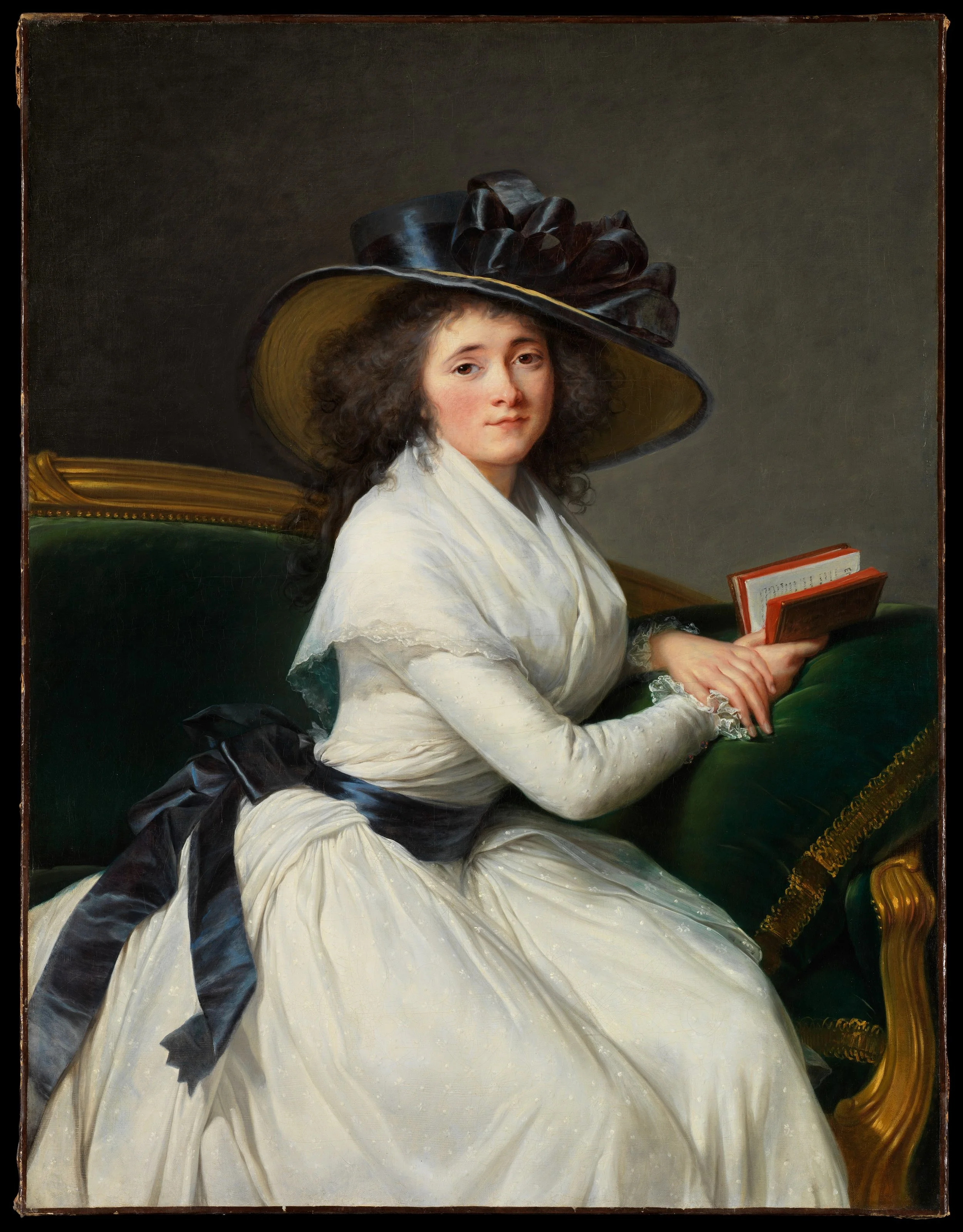
Depictions of 18th century women wearing straw hats
Rather than providing an exhaustive compilation, this list serves as a representative survey that offers further insights into shape and ornamentation.
The Northern Laſs, c. 1700-1725
Evelyn Byrd, c. 1725-1726
Girl with pigeons by Antoine Pesne, 1728
Portrait of three children, c. 1730
Detail from Moll Hackabout arrives in London by William Hogarth, 1731-1732
A woman with a basket of grapes, c. 1732-1765
Portrait of a woman in a landscape, 1735
Plenty, c. 1735-1767
The Elements: Earth, c. 1736-1775
Covent Garden Market by Balthazar Nebot, 1737 (Tate/Guildhall/Christie’s)
Conversation in a park by Thomas Gainsborough, c. 1740
Lady Sophia and Lady Charlotte Fermor by Thomas Bardwell
Margaret 'Peg' Woffington by Philippe Mercier, 1740s
A couple seated on a garden bench by Joseph Highmore, c. 1740-1750
From Joseph Highmore’s paintings for Pamela, c. 1743-1744: Pamela shows Mr Williams a hiding place for her letters, Pamela leaves Mr B’s house in Bedfordshire
The Brockman family at Beachborough by Edward Haytley, c. 1744-1746
Miss Baldwin, c. 1744-1798
Young Woman With Verbena (Earth) by Philippe Mercier
Lucy Ebberton by George Knapton, c. 1745-1750
Katharine Countess of Lincoln, c. 1746-1766
Spilletta, c. 1746-1766
Mr. and Mrs. Andrews by Thomas Gainsborough, 1748-1749
Portrait of a woman in a straw hat by Christian Wilhelm Ernst Dietrich, mid-18th century
The Reaper (Allegory of Summer) by Christian Wilhelm Ernst Dietrich
The Gravenor Family by Thomas Gainsborough, c. 1752-1754
Eleanor Frances Dixie by Henry Pickering, c. 1753

Young Woman With Roses (Spring) by Philippe Mercier, before 1755
Catherine, Lady Chambers by Sir Joshua Reynolds, 1756
Portrait of a young woman by Frans van der Mijn, 1756
Portrait of a lady by Frans van der Mijn
Will your Honour buy a Sweet Nosegay or a Memorandum Book (Twelve London Cries by Paul Sandby), 1760
The Press Gang by John Collet
Portrait of a Girl with a Patch Box by Philippe Mercier, 1760
Miss Murray, c. 1760-1775
High Life Below Stairs by John Collet, 1763
Mrs. Nathaniel Allen (Sarah Sargent) by John Singleton Copley, c. 1763
Hannah Loring by John Singleton Copley, 1763
Miss Nelly O’Brien by Sir Joshua Reynolds, c. 1762-1764
Mary, Countess of Howe by Thomas Gainsborough, 1764
The Return from the Fair by Edward Penny, 1765
Drawing of a young woman by Catherine Louise de Saint-Aubin, 1764
Sarah, Lady Pollington, later Countess of Mexborough, mid-1760s
Mrs. Samuel Barrett (Mary Clarke) by John Singleton Copley, c. 1765-1770
A girl singing ballads by Henry Robert Morland, c. 1765-82
Madame Bergeret by François Boucher, c. 1766
Betty Munro, c. 1766-1783
Mrs. Elizabeth Brownrigg, 1767
Miss W, The Modern Lucretia (Sarah Woodcock), c. 1767-1783
The Female Bruisers by John Collet, 1768
The Pybus family by Nathaniel Dance, c. 1769
Miss Mary Hickey by Sir Joshua Reynolds, 1770
Mrs. Oswald by Johann Joseph Zoffany, c. 1770
Portrait of a lady sewing by Daniel Nikolaus Chodowiecki
Wantonness Mask'd, 1771
A Scene in Covent Garden, Or the Modern Bloods Kicking up a Dust, 1772
The Contented Cobler, 1772
Rural Happiness, Health, Felicity, and Contentment, 1773
The Enraged Macaroni, 1773
The Spirit is Willing but the Flesh is Weak, 1773
Miss Returning from a Visit, or Thomas Fording a Brook with his Mistress
The Colmore Family by Johann Joseph Zoffany
Twelve fashionable Head Dresses of 1775 from The Ladies Own Memorandum Book
Sophia (Vicar of Wakefield), 1776
The sailor’s present, or, The jealous clown by John Collet, 1778
The Manchester hero, or, Arts yield to arms by John Collet, 1778
The studious beauty, 1778
Catherine Langdale by Henry Walton
Girl buying a ballad by Henry Walton, 1778
The pretty maid buying a love song, 1779
The old ballad-singer, 1779
Marie Emilie Cuivilliers, née Boucher by Alexander Roslin, 1779
The Sharp Family by Johan Joseph Zoffany, 1779-1781
The wife at confession to the husband in disguise, 1780
Portrait of an unknown woman by George Engleheart, 1780s
A lady and her children relieving a cottager by William Redmore Bigg, 1781
A man of war, towing a frigate into harbour, 1781 or later
An English man of war taking a French privateer, 1781
Elisabeth Philippine Marie Hélène de France by Elisabeth Vigée-Lebrun, 1782
Self-portrait in a straw hat by Elisabeth Vigée-Lebrun, after 1782
Emma Hart, later Lady Hamilton, in a Straw Hat by George Romney, c. 1782-1794
Rural life, 1783
Marie Antoinette by Elisabeth Vigée-Lebrun, 1783
Catherine (Brouncker) Adye, later Catherine Willett by George Romney, 1784-1785
Antoinette-Elisabeth-Marie d’Aguesseau, Countess de Ségur by Elisabeth Vigée-Lebrun, 1785
The Vicomtesse de Vaudreuil by Elisabeth Vigée-Lebrun, 1785
Self-Portrait with Two Pupils, Mademoiselle Marie Gabrielle Capet and Mademoiselle Carreaux de Rosemond by Adélaïde Labille-Guiard, 1785
Lady Sheffield by Thomas Gainsborough, 1785-1786
Anne Bingham by Joshua Reynolds, 1786 (also The Honourable Miss Bingham, 1786)
Madame Molée-Reymond by Elisabeth Vigée-Le Brun, 1786
Miss Constable by George Romney, 1787
The Rt Honble Countess Spencer, 1787
Mrs. Wells by Sir Joshua Reynolds, c. 1787-1788
Soldier with Country Women Selling Ribbons, near a Military Camp by Francis Wheatley, 1788
The Honourable Elizabeth Ingram (later Mrs Hugo Meynell) by John Hoppner, c. 1789
Isabella (Ingram) Seymour Conway, Viscountess Beauchamp, later Marchioness of Hertford by John Hoppner, c. 1789
Comtesse de la Châtre (Marie Louise Perrette Aglaé Bontemps by Elisabeth Vigée-Lebrun, 1789
Stéphanie-Félicité Ducrest de Saint-Aubin playing the harp
Duchess de Polignac by Elisabeth Vigée-Lebrun, c. 1789
Lady Bess Foster by Sir Joshua Reynolds, c. 1789
Portrait of a young woman by Jean-Laurent Mosnier, c. 1790
Rosina, 1790s
Portrait of a young woman by Elisabeth Vigée-Lebrun, c. 1797