18th Century Dolls
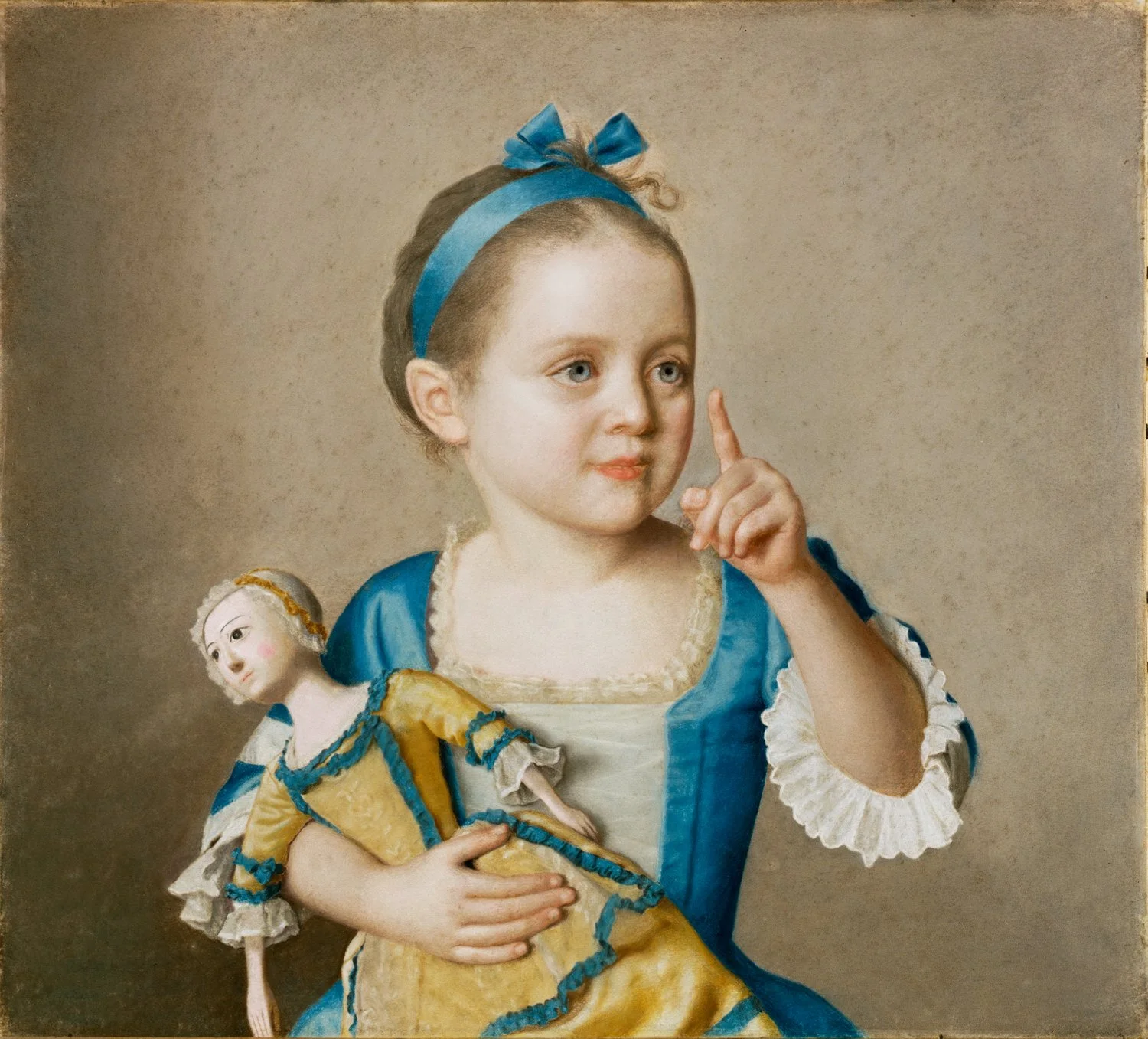
Marianne Liotard by Jean-Étienne Liotard, c. 1775

This directory compiles surviving 18th century dolls, dollhouses, and doll clothing from museum collections worldwide.
It tracks the material history of childhood through physical artifacts, cataloging antique dolls — sometimes known as “babies” — in museum collections, along with depictions of children playing with dolls from 18th century illustrations and artwork.
Most of these Georgian and colonial dolls were wooden, though the exact construction varies.
Additional Resources
This site contains affiliate links for which I may be compensated
The Perfect Eighteenth Century Doll
Evidence of Children at Revolutionary War Sites
German Papier Mache Dolls, 1760-1860
Mill Farm 18th Century Fashion Doll Pattern
Restoration and/or reproduction 18th century dolls:
The Old Pretenders
Susan Parris Originals
Babes from the Woods
Christine LeFever
Sonia Krause
The Wooden Sisters
Search for dolls by Fred Laughon, Susan Parris, Judy Brown, and other Queen Anne dolls on eBay
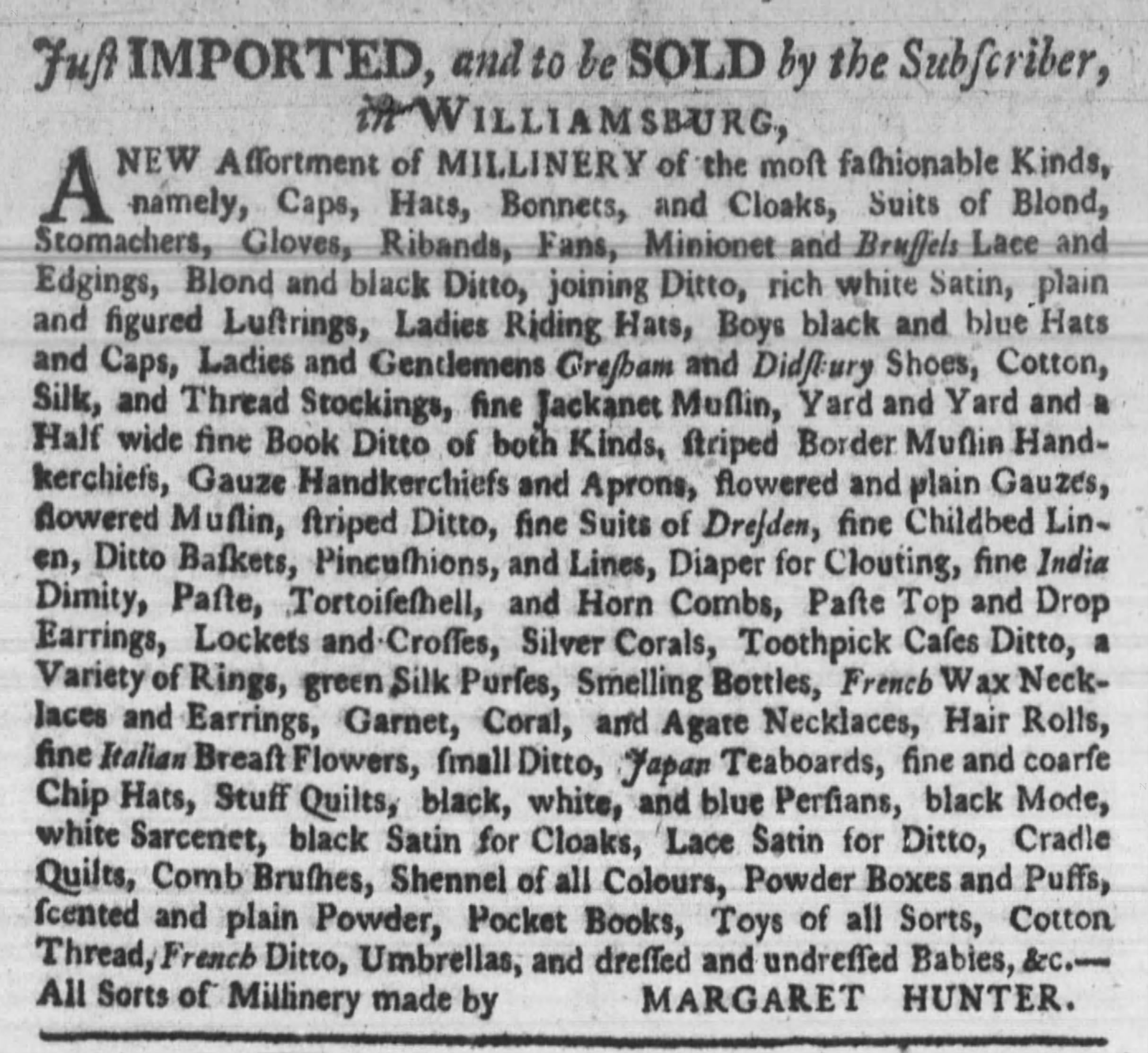
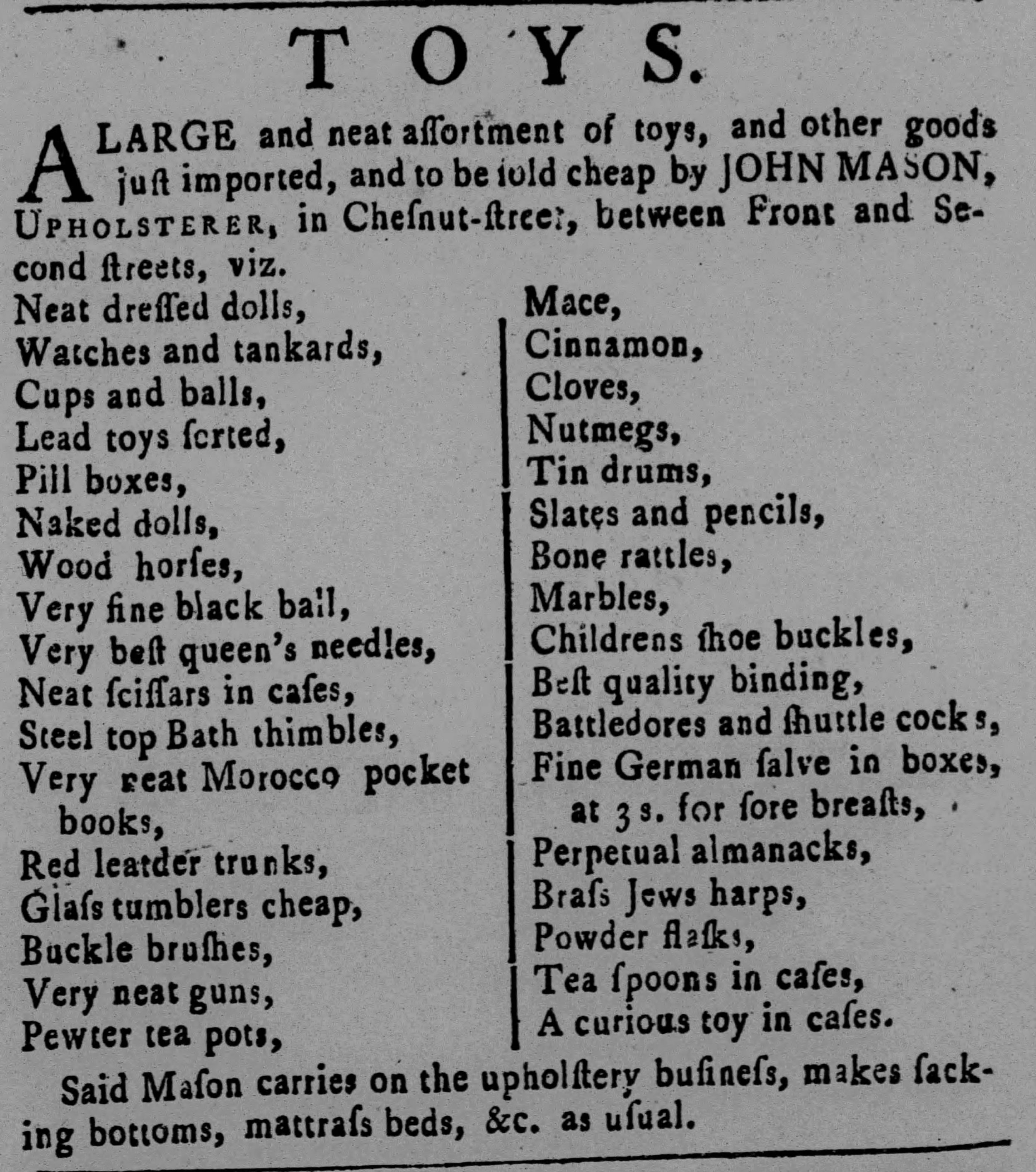

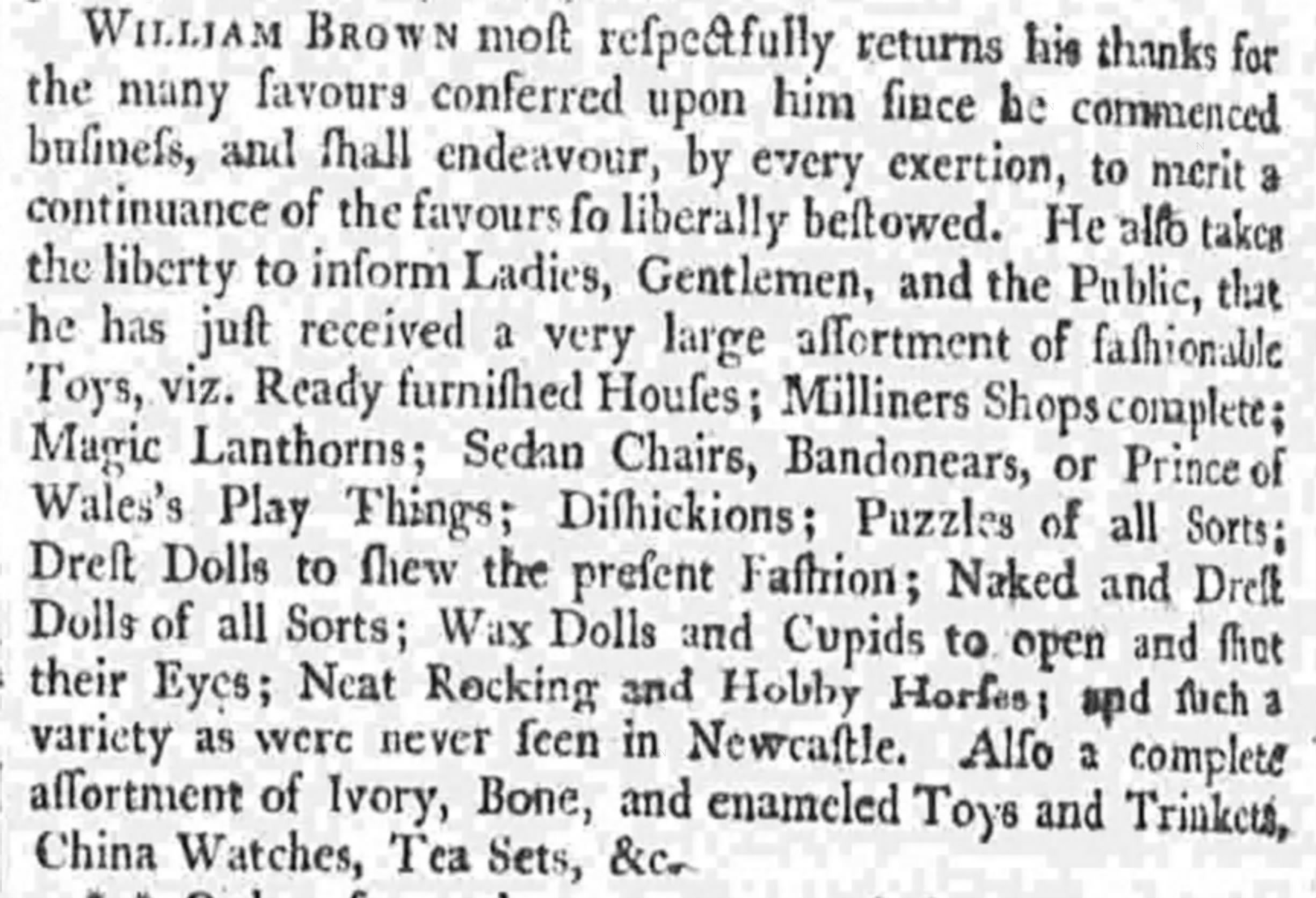
A trial from London in 1733 describes how dolls were manufactured.
William Higgs: “I am a Turner by Trade, but my chief Business is to make Babies, and when they are made my Wife dresses them, my Boy and my Journeywoman follow'd the same sort of Work … I know my own Babies from any other Man's, I can swear to my own Work, for there's never a Man in England that makes such Babies besides my self.”
Court: “Is it not usual for Workwomen to carry the Babies home to dress?”
Judith Higgs: “No, my Husband makes them, and I and my Women dress them at my House, and I have often charged them never to carry the Babies home.”
Jane Tinsley: “My Mistress having given me Warning, I bought some Silk and Tinsel to dress Babies on my own Account. I had as much Silk of a Rag-woman for 6 d. as would cloath a Dozen Babies.”
Johanna Morgan: “I have known Jenny Tinsley these 5 Years, and a very honest Body she is. For my own part, I never dress'd a Baby in my life; but on the 21st of March about Noon, Nell, what d'ye call her? a crooked Body, brought two dozen of these Dolls to my House Jenny came with her indeed, but it was Nell that had the Dolls. And so, says Nell, says she, I wish you would go and sell these Dolls for me to such a Man, in St. Catherine's-Lane, that has bespoke 'em I am afraid Nell, says I, that these Dolls belong to your Master [William Higgs.] No, says Nell, they are nothing but old rubbishing Dolls that lie about our House, and such as we often fling away, and I have got our Joe to paint their Faces up, and make them look a little smug; so away goes I to this Man's House, but when I came there he was provided, for he had just bought half a Gross of Dolls for 15 s. back I comes to Nell, and tells her how, and about it. Well, says she, go to Mr. Robottom's in White-Chapel, and see if he won't buy them. No, says I, Nell, any Body may see by my Looks, that I am no Doll-dresser. So then Nell was for going away, and Jenny said to her (but I don't know what she meant by it) I wish you would dress those two odd Dolls for me. When Nell was gone, I advised Jenny to go to her Master's, for fear she should lose her Work; but it raining very hard, she could not go without being wet to the Skin, and so she staid till 9 at Night, and then went home. About half an Hour after comes Nell again, and asks for Jenny. I told her she was gone, and with that Nell turns about, and beckons thus with her Finger - I ask your Lordship's Pardon - and in comes Mr. Higgs and his Wife. Says he, What's in that Basket? A Parcel of Dolls, says I. Give them me, says he, No, says I, you may take them if you will. So his Wife took the Basket, and turn'd the Dolls out upon my Bed and told them, and then she put them up again.”
(I’m not sure whether this is the same William Higgs who was making dolls in the late 17th century, such as Lady Elizabeth and this restored doll.)
A J.S. Muller print from c. 1740 also describes the use of secondhand clothing and rags to make doll clothing:
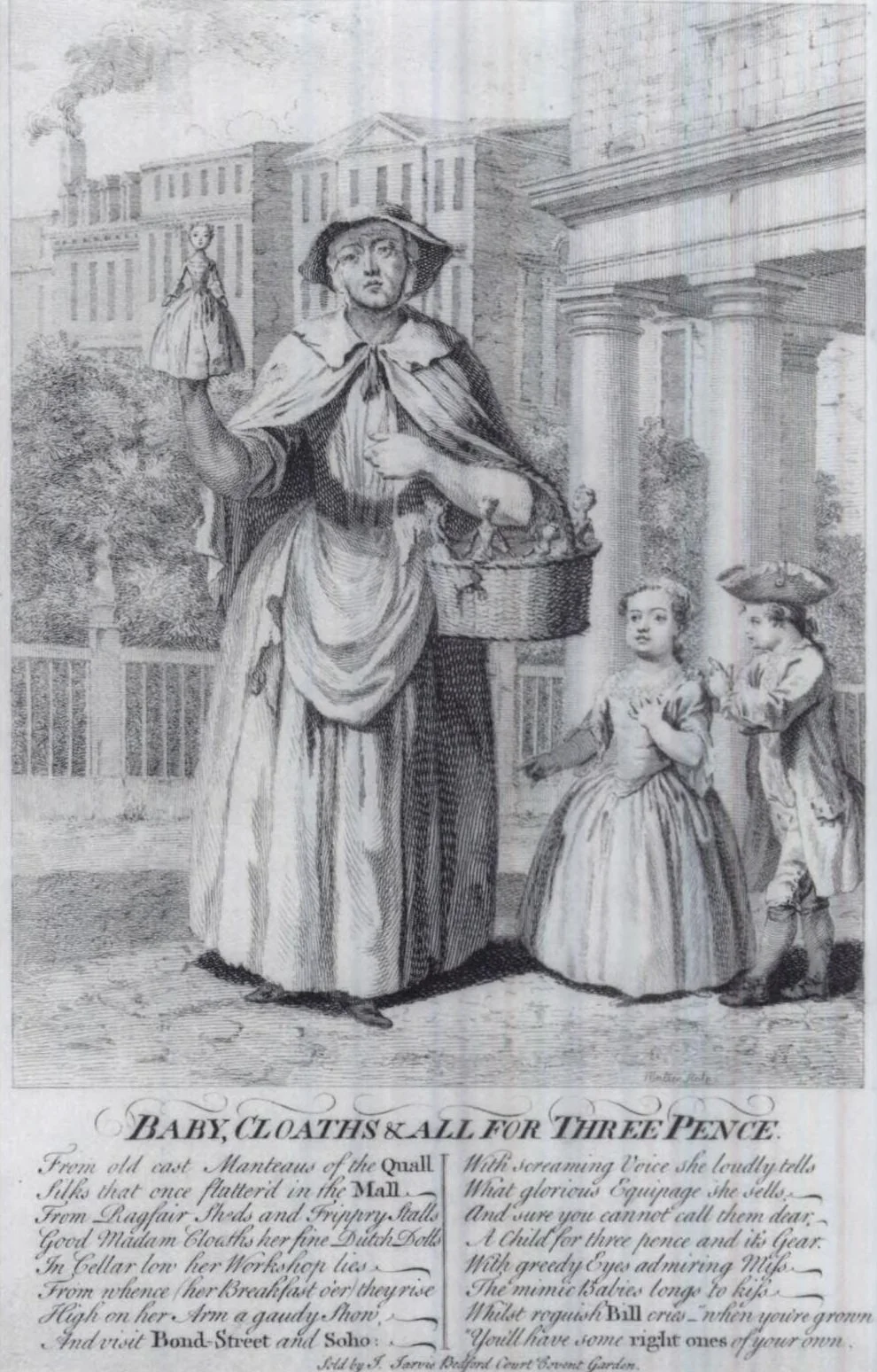
BABY, CLOATHS & ALL FOR THREE PENCE
From old cast Manteaus of the Quall.
Silks that once flatter’d in the Mall.
From Ragfair Sheds and Frippry Stalls
Good Madam Cloaths her fine Dutch Dolls
In Cellar low her Workshop lies
From whence her Breakfast o’er they rise
High on her Arm a gaudy Show,
and visit Bond Street and Soho
With screaming Voice she loudly tells
What glorious Equipage she sells
And sure you cannot call them dear,
A Child for three pence and it’s Gear.
With greedy Eyes admiring Miſs
The mimic Babies longs to Kiſs
Whilst roguish Bill cries “when you’re grown
You’ll have some right ones of your own.”
18th century wooden dolls
Strong 73.1447, c. 1690
V&A T.847-1974 (“Lord Clapham”) and V&A T.846-1974 (“Lady Clapham”), London, c. 1690-1700
Letitia Penn doll, 1699
Bonhams auction 16877, lot 397, c. 1700
London Museum 37.33/1, c. 1701-1710; “Child doll with a painted wood head with the remnants of a brown wig. She is dressed in a gown of Indian silk, striped satin blue and white with a narrow red border, embroidered with red tulips, with attached leading strings. Her other clothes include a linen muslin apron and white suede mittens. This doll was for admiring, not playing with. The gown is made from Indian silk embroidered with small flowers.”
V&A MISC.264-1978, England, c. 1700-1720
Manchester 1922.169, c. 1700-1725; “Wood with rag upper arms, painted fatures. Dressed in wrapper; cream trimmed dress held on with pins; linen/lace cap held on with pins.”
KCI AC1774 78-41-178, England, early 18th century
MFA 43.1768, England
Wallington National Trust 585204, a black wood doll, 1710
RIHS 1985.28.1, a Queen Anne doll, c. 1725
Colonial Williamsburg 1958-241, a doll with a leading string on her printed gown; England; doll from early 18th century, gown probably 1770-1780
MFA 43.1769, a male doll, England, c. 1730-1740
Manchester 1961.250, c. 1730-1740; “Wood and linen, face and neck covered with gesso and painted, glass eyes, remains of fair hair nailed to head. Chemise: linen, cuffs with narrow lace edging tied with pink ribbon. Ribbed cotton petticoat with two rows of pink ribbon round edge. Petticoat: linen, quilted, lined with wool. Ribbed cotton pocket, bound with linen tape. Dress, pink and yellow striped silk, bodice fastening at CF, skirt with front fall; blue silk cuffs and binding round neck and opening; lace edging round neck and opening. Stockings: white woven silk with pink embroidered clocks; shoes, pink figured silk. Necklace: white beads tied with black chenille.”
Bowes 1970.187.a/TOY.301, England, c. 1740 (see also blogs about conservation work on her undergarmentsbody, and clothing)
V&A MISC.271-1981, England, c. 1740-1750
Nordiska museet NM.0151866, a male doll holding a platter of chicken, c. 1740-1759
Colonial Williamsburg 1971-1738,1-4, doll and original clothing, Great Britain or Europe, 1740-1760
Christie’s Lot 608 / Sale 5746, a very rare George II turned wood baby doll
Manchester 1955.21, England, c. 1740-1760
National Trust Museum of Childhood 664798, c. 1745-1765
A doll “given to Mariana Davis in Paris in 1747, when she was three years old and had just recovered from a dangerous illness … The doll is two feet high, and made of wood. The dress, which is lifted to shew the pincushion on the petticoat, is of red, white, and green striped silk, with a Watteau back. The petticoat is wide and hooped, and has two pockets suspended from the waist; one has a monogram embroidered on it, and the other a coat of arms. The pincushion is also suspended from the waist by a ribbon strap, and hangs quite low on the edge of the petticoat. It is covered with satin, of a salmon-pink shade, with a yellowish ground, but the satin is so faded it is impossble say what the original colours were.” (Pins and Pincushions)
Withington auction October 18, 2012, wooden doll c. 1750
Mary Merritt Lot 15, England, mid-18th century; a doll with “wooden shoulder head with long neck and graceful features, brown pupilless glass eyes, platinum curled wig, kid body with wooden limbs”
London Museum A27030, c. 1745-1755; “Wooden doll with painted face, human hair and glass eyes. Doll is wearing a lace trimmed linen chemise, two petticoat (one is quilted linen, the second is printed linen), stays of silk stiffened with baleen, a dress of dark green silk taffeta and a frilled white cotton cap (possibly a later addition).”
Strong 79.9665, c. 1750-1760
V&A MISC.49&:1 to 3-1963 (“Sophie”), England, c. 1750-1770
Strong 79.10971, c. 1750-1800
Strong 79.451, c. 1750-1800
Nederlands Openluchtmuseum P.1-26, a doll dressed like an unmarried woman from Hindeloopen, c. 1750-1800
Nederlands Openluchtmuseum P.1-44, doll dressed like an 18th century baby from Hindeloopen
V&A T.90 to V-1980, a fashion doll, England, c. 1755-1760
Doll from the collection of Neil and Anna Rasmussen, c. 1755-1765
MFA 43.1770, England
Centraal Museum 10752, with a papier-mâché head and wooden limbs, and dressed in the fashion of c. 1760
London Museum 27.76a, 1756-1760; “Dressed wooden doll with painted face, glass eyes and human hair, probably a replacement wig. With jointed wooden arms. Wearing a sack dress with matching petticoat of pink and yellow figured Spitalfields silk and pink silk stays. Also a linen chemise, linen stays, three linen petticoats and a stiffened hoop. Doll also has an earring and locket, probably later additions. Doll known as 'The Queen of Denmark'. Believed to have been given by an English princess to Elizabeth, daughter of Thomas Sampson, Chaplain of the Royal Hospital at Chelsea. It is possible that the princess was George III's sister Caroline Matilda who married Christian, King of Denmark in 1766.”
Rijksmuseum BK-NM-3396, c. 1760
Miss Barwick of the Ilkley Toy Museum, c. 1760
Dudmaston National Trust 815064, Jane, 1760
National Trust Museum of Childhood 664799, c. 1765-1775; “A jointed wood and fabric doll with a painted wooden head, torso, forearms and hands, and fabric upper arms. Her face has painted features, glass eyes, real dark brown hair in a plait, and earrings - one resin drop missing. The doll is wearing a gold silk dress, with a white muslin bodice trim and layered cuffs. Underneath she has a green-blue quilted petticoat overlaid with net, two white cotton under petticoats, and cotton stockings (one with a hole in it) tied with cream ribbon. She has green silk shoes, tied with cream silk bows, with leather soles. On her head is a white lace bonnet. The doll has a silk leading rein sewn into the back of her dress.”
London Museum 46.13/1, c. 1770; “This 'Queen Anne' doll was made by an anonymous craftsman, probably in London. Dolls were often purchased at fairs, such as the Bartholomew Fair at Smithfield. The doll making industry thrived in the capital for most of the eighteenth century. It was protected by the government which levied heavy import duties on toys from abroad. This tax regime was relaxed in the 1780s leading to an influx of cheaper imported dolls. The quality of English-made dolls declined as a result.”
Christie’s Lot 978, Sale 8004, a carved and painted limewood doll, c. 1770
Colonial Williamsburg 1966-169, doll with fashionable clothing, England, 1770-1775
V&A MISC.41-1968, England, c. 1770-1775
Colonial Williamsburg 1971-1739,A-E, painted wood doll in a silk gown with leading strings, England or Germany, 1775-1785
Fries Museum T1959-057, doll dressed in a complete 18-piece costume from Hindeloopen, c. 1775-1799
Nederlands Openluchtmuseum P.21-53, a miniature doll dressed like an adult woman from Zaanstreek, c. 1775-1800
Nederlands Openluchtmuseum P.34-53, a miniature doll dressed like an adult woman from Zaandam, c. 1775-1800
Amsterdam Museum KA 1225.1/5, c. 1776-1799
Fries Museum T1941-012, c. 1775-1784
Nordiska museet NM.0107718, 1780
Bonhams Auction 20914, Lot 62, pair of painted wooden dolls, c. 1780
Christie’s Lot 588 / Sale 9494, a turned and carved wood doll, for a baby house
Nordiska museet NM.0112941A-H, an 18th century doll in early 19th century clothing
Christie’s Lot 1179 / Sale 9853, c. 1775
A bed-post doll found in lower Manhattan; see Evidence of Children at Revolutionary War Sites
V&A MISC.15-1952, England, c. 1770-1785
LACMA M.85.229a-c, a male court doll, France, c. 1780
Manchester 2013.106 (“Emmaline”), c. 1780-1790; “Wood and cloth body. Wooden head with face and neck covered with gesso and painted, glass eyes, original brown hair nailed to head. Carved wooden hands and feet with jointed cloth arms and legs; olive silk dress, with pink ribbon sash at waist; 2 white cotton petticoats; white linen cap; large brimmed bonnet covered in cream silk.”
Ann Proctor's doll, c. 1785
DAR 72.33, “Wooden doll with a gesso covered body and head. The face has handpainted features and enameled glass eyes. She is wearing a reproduction costume made from 18th century fabrics consisting of a blue silk robe, a red quilted petticoat and stomacher, an underpetticoat, a pocket and a white cap trimmed with lace. The head and torso are one piece and are jointed at the hip and knees. Arms are strings that terminate in whittled lower arms and hands,” England, late 18th century
Rufford Old Hall National Trust 784611, Priscilla, 1790
Colonial Williamsburg 2005-102,1, wooden doll with wardrobe, probably England, c. 1790; see also A Well-Loved Georgian Doll and Her Wardrobe, c.1790
Concord Museum PER1129.2, a handmade doll with a hickory-nut head
Christie’s Lot 270 / Sale 4105, an English turned and carved painted wooden doll, late 18th century
Christie’s Lot 770 and 768 / Sale 9724, a fine English turned wood doll late 18th century
MFA 43.1607, sewing kit in the form of a doll, England, late 18th century
Bonham’s Sale 17971, Lot 159, a German doll, late 18th century
May Merritt Lot 28, a male doll and a female doll, late 18th century
Late 18th century Russian dolls at the Met: 2009.300.1718 and 2009.300.1719
Colonial Williamsburg 1958-242, a doll named Hagar Tyler, wooden with a molded plaster head, England, late 18th or early 19th century
Concord Museum PER1169, a doll from the late 18th or early 19th century; “Late Queen Anne style doll. Only wooden head and torso are original … Head has crudely carved mouth, nose and eyesockets. Set-in glass eyes are black and white, pupil-less. There is a carved hole in the top of the head- to attach the wig- and a small nail protruding from the side of the head from which to hand an earring. The nail on the other side of the head is missing, leaving a hole.”
Concord Museum PER1168, c. 1770-1805; “Doll with glass eyes, and paster head with hand-painted mouth, cheeks, eyebrows, and dotted eyelashes. Doll has grey, possibly human hair sewn into a canvas cap. There are two pink silk bows in the doll's hair, and a pink ribbon around the waist. The hands are wooden with fork fingers. The dress is cream but may have originally been pink. The material is Indian cotton with an empire waist and a repeated embroidered pattern of diamond and "X" shapes. There are net and pink ribbon details along the neck, shoulders, and waist. Sleeves may be removable. There are three petticoats: 1 wool, 1 cotton, and 1 linen. Doll is wearing cream knit stockings, and shoes or slippers with dark laces.”
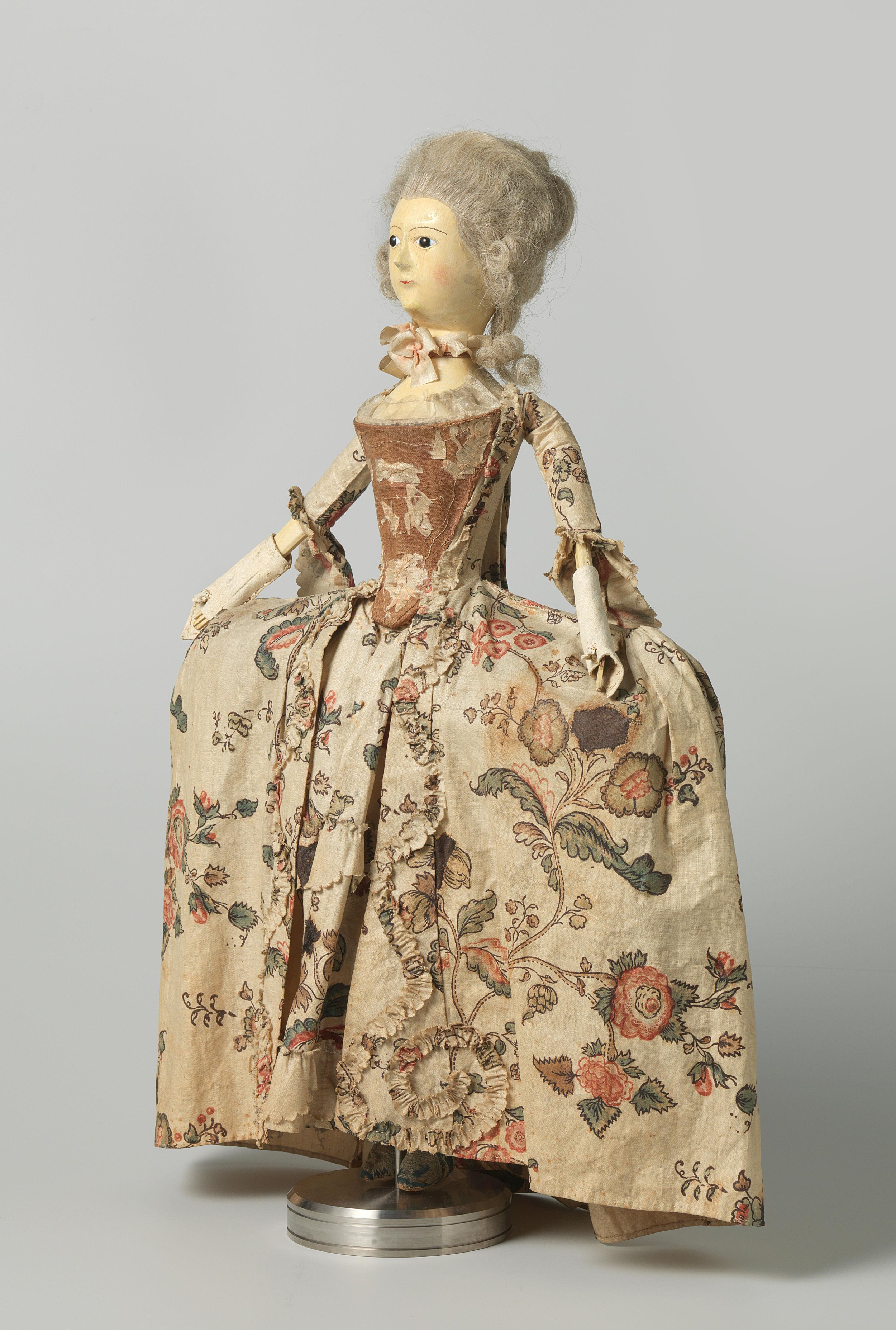
18th century wax dolls
Nordiska museet NM.0151865, made in the first half of the 18th century; the black velvet dress is probably a later addition
Historic New England 1924.918 and 1924.919, c. 1720-1725; “These extraordinary objects, made by the teen-aged daughter of a well-to-do Boston, Massachusetts, family, are the only American-made free-standing figures known to have survived from the eighteenth century. Wax work, like fancy needlework, was among the artistic skills considered important in the education of young girls during this period. Sarah Gee supported these figures on armatures and used colored beeswax and real fabric trimmed with lace dipped in wax for their bodies. They are protected by their original English bell jars and mounted on turned wooden pedestals made to fit the jars.”
London Museum A21996, c. 1745-1760; “Doll with a poured-wax head and arms, glass eyes and mohair wig on a stuffed cloth body, which has feet moulded in red sealing wax. The doll's dress is made from Spitalfields silk brocade and has leading strings.”
“Wedneſday Evening about Five o’clock was found in Winfield-ſtreet, a little Girl of about ſeven Years of Age, crying very much, who had been decoyed away from the Plaiſterers Arms in Red-Lion-ſtreet, Whitechapel, by a luſty fat Woman, who, under a Pretence of giving the Child a large Wax Doll, carried her into Spital-fields …” (Jackson’s Oxford Journal, January 3, 1756)
V&A W.183:7-1919; petticoat had a note pinned to it saying “Mrs Powell Wedding Suit 1761”
Nordiska museet NM.0025851, a doll dressed in a Norwegian bridal gown from Telemark, made c. 1770-1779
National Trust Museum of Childhood 668426, c. 1780; “A wax head and shoulder doll with moulded and painted facial features and brown hair. Her lower arms and boots are wax. The body is made of stuffed fabric. On her head she wears a red skull cap with tinsel decoration. Her short sleeved dress of cream fabric has silver coloured spots. Both the hem and skirt are decorated with tinsel. Underneath is a cream cotton petticoat with a serrated hem. A long red train, which has a plain backing, is attached to her shoulders and is again decorated with tinsel. The fabric is badly worn. She stands on a round wooden base to which she is held by wire. A red and cream fabric decoration (possibly flowers) is at her waist.”
“An honeſt Yorkſhire woman goes from houſe to houſe with a wax doll in a box, which ſhe pretends is to be raffled for …” (The Public Register, or, Freeman’s Journal, October 17, 1793)
Dolls made of other materials, including 18th century rag dolls and paper dolls
Paper cutout dolls made by Susanna Duncombe (née Highmore): Tate T04306, Tate T04307, Tate T04308, Tate T04309, Tate T04310
PVMA 1885.40.07, a rag doll (named “Bangwell Putt”) made for a blind girl (Clarissa Field of Northfield, Massachusetts), c. 1770
Nordiska museet 0022622A-B, a pair of dolls made of silk wrapped over wire, c. 1770-1779
National Trust Museum of Childhood 665109, England, 1785; “A small, stuffed, calico doll with painted facial features and blonde hair. She has paper or card hands with only one remaining finger. She is wearing a cream muslin dress with pin tucks in the skirt and bodice, a muslin cap with ribbon trim and red ribbon shoes. Beside the doll, on a stand, is a cream silk hooded cape, a cream muslin dress with pin tucks and a twisted wire cane.”
18th century doll clothes
The dolls known as Lord Clapham and Lady Clapham have many garments and accessories, which can be found on the V&A’s “Search the Collections” site.
Met 13.204.63, silk trousers, France
MFA 43.1772a,b, a pink silk taffeta robe à française and petticoat
Allentown Art Museum 1974.079.826, a doll’s dress in silk and metal thread brocade with silver lace, c. 1730
Historic Deerfield 2003.55, a hoop petticoat, probably for a fashion doll, c. 1735-1765
National Trust Museum of Childhood 664801, a printed cotton (fustian?) robe, c. 1745
Christie’s Lot 66, Sale 5666, a doll’s mid 18th century half hoops
Met 2009.300.1740, France, c. 1740-1760; “This charming miniature coat is constructed exactly like a man’s suit coat of the period. The spindly flower embroidery on the pocket flaps and cuffs is particularly whimsical and has a biomorphic quality.”
Fries Museum T1957-548, a doll’s chintz robe, c. 1750-1799
Powerhouse Museum H4448-149, a doll’s shoe, England, c. 1760-1800; “Dolls single straight shoe of veldtshoen construction with blunt point toe and no heel. Shoe consists of red and brown uppers, featuring a Morocco vamp and one piece quarters, remains of pink silk lining and a leather sole.”
Colonial Williamsburg 1966-171, a doll’s robe in block-printed cotton, England, 1770-1775
Met 13.204.61, a doll’s silk brocade jacket (?), France
MFA 48.362, a white dimity pocket with linen tie, America
18th century dollhouses and “baby houses”
Rijksmuseum BK-NM-1010, the doll’s house of Petronella Oortman, c. 1686-1705
National Trust 959710, The Nostell Dolls' House, c. 1729-1742
V&A MISC.24-1967, England, 1750-1800
V&A W.1-1954, The Henriques House, England, c. 1750-1800
W.9 &:1 to 348-1930, the Tate Baby House, England, c. 1760
The Blackett Baby House, England, c. 1760
V&A W.13-1949, The Denton Welch dolls’ house, England, 1783
V&A MISC.240-1979, dollhouse set into the top of a writing-desk, England, c. 1790-1800
V&A W.49-1925, May Foster’s House, England, c. 1800
18th century doll furniture
Furniture and accessories from the Blackett Baby House, c. 1690-1770
Colonial Williamsburg 1940-224, a cradle, southeastern America, c. 1775-1825
Furniture and accoutrements at the Manchester Art Gallery, including baskets (1922.514), various ceramics (1922.349, 1922.359, 1922.373), pewter tableware (1922.241), a bureau (1922.220), a chair (1922.260), a chest (1922.394), a chest of drawers (1922.217), a fireplace (1922.501), a mirror (1922.538), a table (1922.347), and an urn 1922.226)
18th century depictions of children with dolls
Children’s games by Willem van Mieris the Younger, 1702
Woman with children at a fairground booth selling dolls and toys, c. 1714
The daughters of Sir Matthew Decker, Bart. by Jan van Meyer, 1718
Katherine Whitmore by Bernard Lens III, 1724
Peasants dancing on the green before an inn by John Collet
A mother and two children by Willem van Mieris, 1728
A Children’s Tea Party by William Hogarth, 1730
Peasant girl looking at a doll by Edme Bouchardon, c. 1730s
Gerard Anne Edwards Hamilton in his Cradle by William Hogarth, c. 1732
Front of a secondhand shop, c. 1734-1735
L’Inclination de l’Age by Pierre-Louis de Surugue after a painting by Jean Baptiste Siméon Chardin, c. 1737-1738
Le Dejeuner by François Boucher, 1739
Family group with a harpsichord by Cornelis Troost, 1739
Baby, Cloaths & All for Three Pence, a doll seller in London, c. 1740
Samuel Richardson surrounded by his second family by Francis Hayman, 1740-1741
Lady and gentleman with two girls and a servant (A Lady in a Garden having Coffee with Children) by Nicolas Lancret, 1742
The Charming Doll by Anne Claude Philippe de Tubières, Comte de Caylus, after Edme Bouchardon, 1742
Catherine-Félicité and Adélaïde Berthelin de Neuville by Carle van Loo, 1743
Building houses with cards, 1743
The Letter by Pietro Longhi, 1746
Street characters by Paul Sandby, c. 1747-1760
Das Stecken-Pfert, die Dock und andtre Spiel-wercks-Sachen …, c. 1750
Girl with a doll by Jean-Baptiste Greuze, 1750s
The Brak family by Tibout Regters, 1752
Elizabeth Randolph by John Wollaston, c. 1755
Isabella Morris by John Wollaston, c. 1755
Mann Page III and Elizabeth Page by John Wollaston, c. 1755-1758
Family group, c. 1756
Mary Lightfoot by John Wollaston, 1757
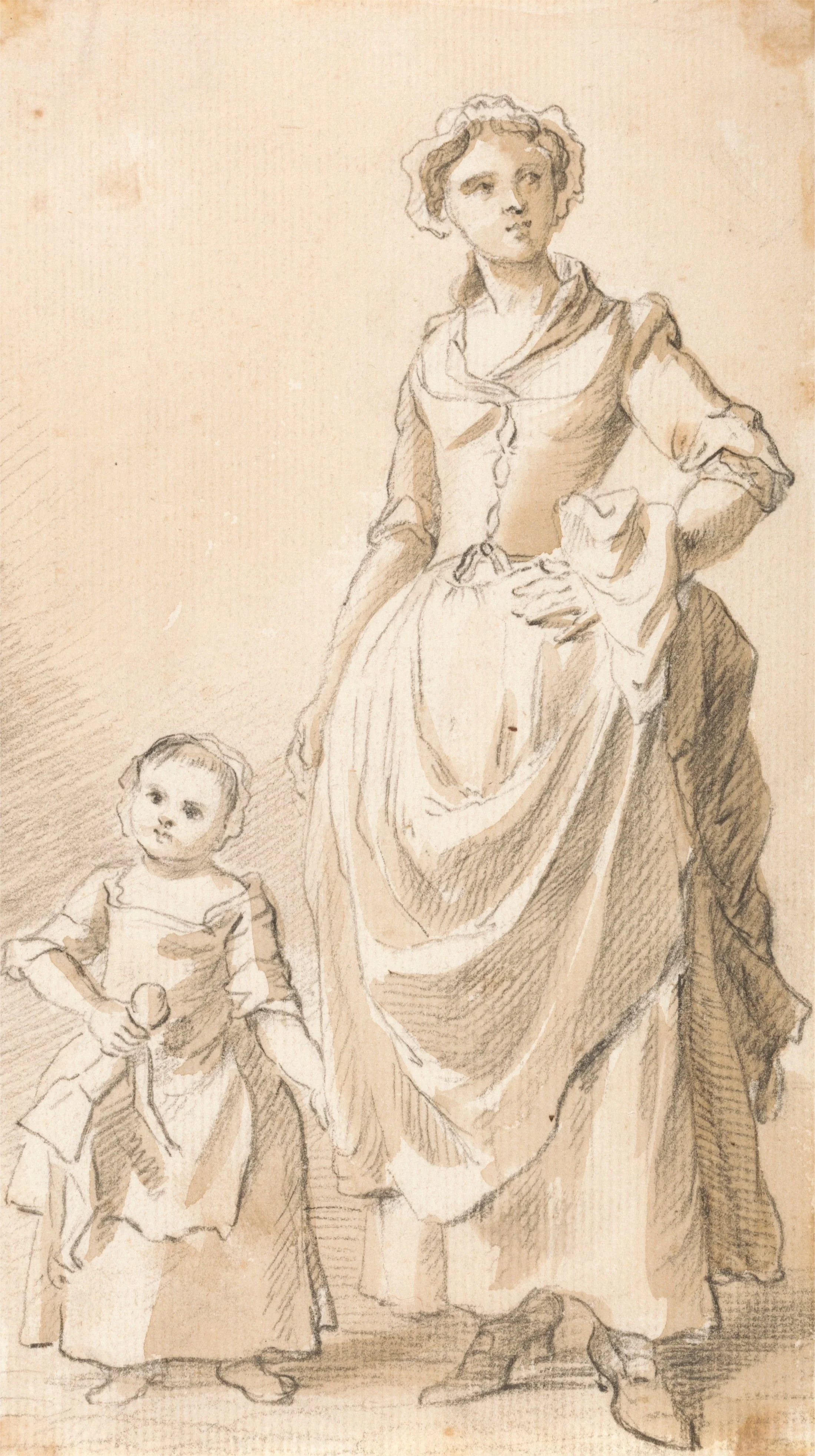
Woman and child holding a doll by Paul Sandby, c. 1758-1760
London Cries: A Fishmonger by Paul Sandby, c. 1759
A seated girl with a doll by Paul Sandby
The Misses Garrick by the Thames at Hampton by Johann Zoffany
Madame d'Orval et mademoiselle de Wargemont by Carmontelle, 1760
Self-portrait with his wife Sanneke van Bommel and their two children by Hendrik Spilman, c. 1761-1784
Saint Nicholas Day in the Imperial Family of Austria, 1762
Mamma Giving Toys, c. 1760-1765
Little girl feeding cherries to her dolls by Michel Honoré Bounieu
High Life Below Stairs by John Collet, 1763
Cornelia Chambers, later Mrs John Millbanke, 1763
Selina Chambers, 1764
Building houses with cards, 1764
Portrait of a girl holding a doll by Susanna Duncombe, c. 1765
Portrait of a girl with a doll, 1767
The Quiet Husband, 1768
Charlotte Augusta Matilda by Johann Zoffany
The Two Sisters by Jean Honoré Fragonard, c. 1769-1770
Reynard’s Last Shift, 1770s
Charlotte Augusta Matilda by Johann Zoffany, c. 1771
The City Chanters by John Collet, 1771
A Child by John Flaxman, 1772
Two Sisters by Carl-Ludwig Johann Christineck, 1772
Maria Theresa of Austria-Modena, c. 1775
Christopher Anstey with his daughter by William Hoare, c. 1775
Marianne Liotard holding a doll by Jean-Étienne Liotard, c. 1775
L’Enfance - Childhood, 1775
Domestick Employment by William Wynne Ryland, 1775
The Copley Family by John Singleton Copley, c. 1776-1777
Drawing of a boy and a girl with a doll by Pieter de Mare, 1779
View of St George’s Chapel and the Town Gate of Windsor Castle by Paul Sandby, published 1780
The Encampment at Blackheath by Paul Sandby, 1780
The Asylum for the Deaf by John Collet, late 18th century
Le petit Fille vue de face est vétue d’un Foureau de Tafetas, 1780
Child Holding a Doll by John Downman, 1780
James Gandon and family by Paul Sandby, 1780
The Comforts of Industry by George Morland, 1780
Portrait of a child holding a doll by Giovanni Battista Cipriani
Mr. Deputy Dumpling and Family Enjoying a Summer Afternoon, 1781
Het Bescheiden Kind (The Humble Child), c. 1781-1799
The family of Mégret de Sérilly by Jacques Thouron, 1787
The Power of Justice by George Morland, c. 1788
Louisa Airey Gilmor (Mrs. Robert Gilmor) and her daughters, Jane and Elizabeth by Charles Willson Peale, 1788
Peggy Sanderson Hughes and her daughter by Charles Willson Peale, 1788-1789
Ann Proctor by Charles Willson Peale, 1789
Illustration from The Cottar’s Saturday Night by David Allan, c. 1790
A Wife - Une Femme Mariée, 1791
Mrs. James Peter Fector of Dover, with her son Peter and daughter Mary Frances by Francis Alleyne, c. 1791-1792
Girl with a doll, 1793
Hushaby, Lullaby, 1794
Girl with a doll by Anne-Geneviève Greuze, before 1795
’Tis my Doll, 1795
The Music Lesson by Martin Drölling, 1796
Rosalie Durieux by Cadet de Beaupré Jean Baptiste Antoine
Child with a doll by Christian Leberecht Vogel
Girl playing with a doll by Henri-Pierre Danloux, 1790s
The family of Arend van Roggen and Johanna Hendrika Graadt by Rienk Jelgerhuis, 1798
La mere a la mode; La mere telle que toutes devraient etre, 1800
Het meest, ô Jeugdt! dat gy hier ziet, Is Kinderſpel
A nurse with three children by Paul Sandby, c. 1800