Nodding Mandarin Figurines in the 18th Century
Nodding mandarins — now known as “Chinese nodders” — sit at the intersection of 18th century chinoiserie and the modern bobblehead. These ceramic figures depicting Chinese people were made in China for export to the European market in the 18th and 19th centuries.
These 18th century figurines were often made with a long neck set into a hollow body so that the head would appear to nod, as demonstrated by the lady in this pair of early 19th century figurines at Howe London.
Chinese nodding figurines decorated Western mantelpieces, and appear in artwork depicting 18th century English interiors. Their nodding motion was referenced figuratively:
“After the company in this dwelling of preſent convenience had continued ſilent for ſome time, ſome nodding their empty ſculls like a ſhaking mandarine upon the chimney-piece of a connoiſſeur in Chineſe rarities …” (The Midnight Rambler; Or, New Nocturnal Spy, 1770)
“On theſe occaſions there is ſomewhat ridiculous in the two great wigs nodding at each other, like two Mandarins on a chimney-piece, the wearers of them not uttering a word in this ſolemn act of taking leave.” (Poulson's American Daily Advertiser, July 30, 1789)
“Carduus criſpus, or Curled Thiſtle … It is ſo delicately ſenſible of the night air, that towards evening it conſtantly turns its face from the wind, and then ſhews its naked white neck behind, like that of a nodding Mandarine on the chimney-piece.” (from a 1790 letter from Dr. John Berkenhout to his son)
Similarly, “nodding Mandarin” is the common name for Prosartes maculata, a flowering perennial native to woodlands in eastern North America.
Extant nodding mandarins
Chinese nodders from the 18th century also come up for sale in auctions and antique shops, such as Sotheby’s, Christie’s, Bonhams, Adam Calvert Bentley, Thomas Coulborn & Sons, Rolleston Antiques, Michael Lipitch, Rob Michiels Auctions, Stadsauktion Sundsvall, etc.
V&A FE.18 to C-1978, a pair of Chinese ladies each holding a ruyi sceptre in one hand and a red scarf, made in Jingdezhen, c. 1740-1760
National Trust 1401957, a seated Chinese lady and gentleman, both in formal red robes, probably made in Guangzhou in the second half of the 18th century or early 19th century
Royal Collection Trust 26084, a Chinese man holding a halberd, probably made near Guangzhou in the late 18th century
Royal Collection Trust 26085, a Chinese lady sitting on a throne, probably made near Guangzhou in the late 18th century
Royal Collection Trust 26091, a seated Mandarin, probably made near Guangzhou in the late 18th century
Florence Griswold Museum 2003.1.1&2, c. 1790-1820
Royal Collection Trust 176, a set of figures of a seated Chinese man and woman, probably made near Guangzhou in the late 18th to early 19th century
V&A FE.28:1,2-1970, a Chinese man and a Chinese woman, made in China c. 1800
Peabody Essex Museum E7097 & E7098, made in Guangzhou in 1803
Rijksmuseum NG-878-A, a Chinese man holding a staff. c. 1804-1808
Rijksmuseum NG-878-B, a Chinese woman holding a staff, c. 1804-1808
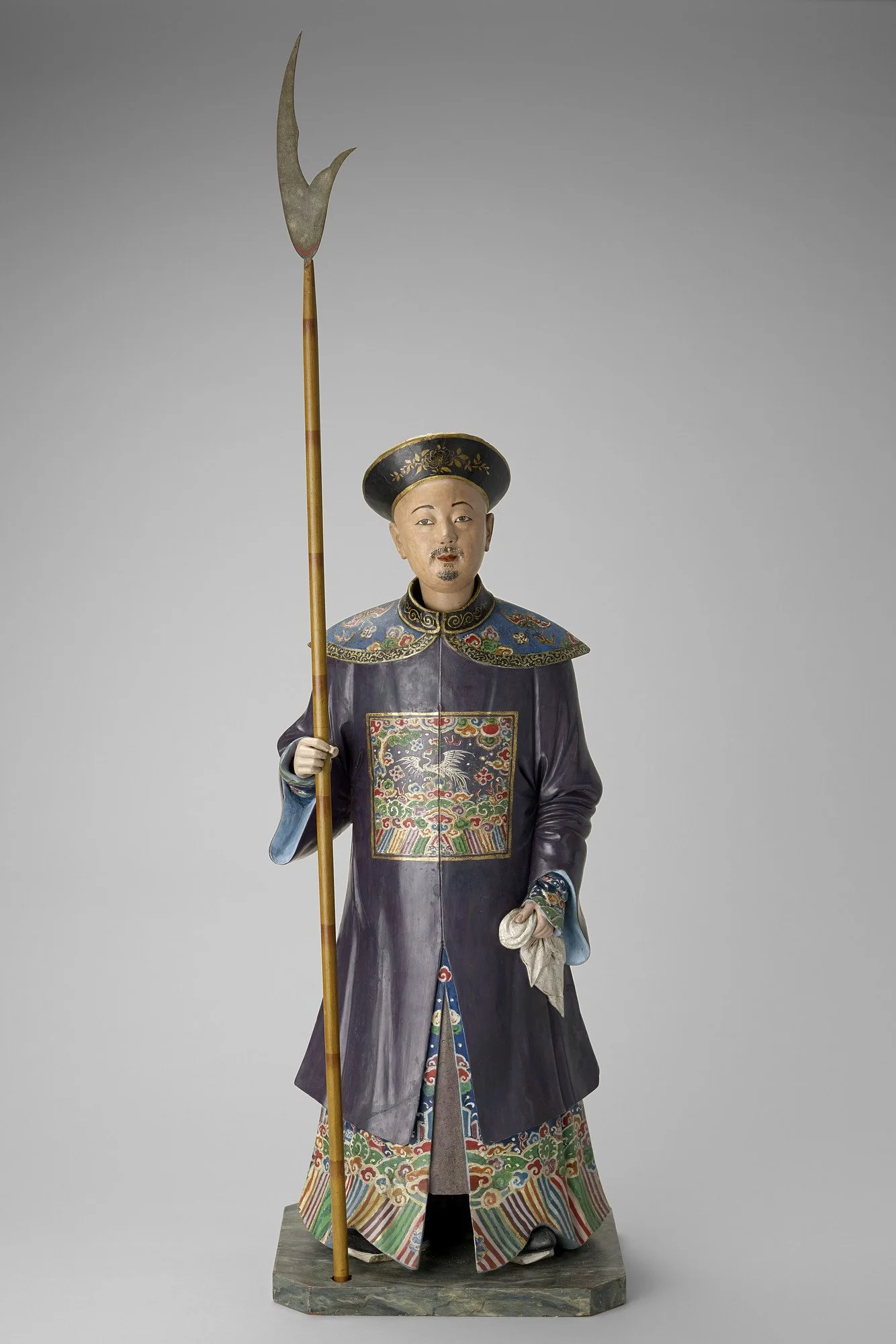
© Royal Collection Enterprises Limited 2026 | Royal Collection Trust
Advertisements for imported decor, including nodding mandarins
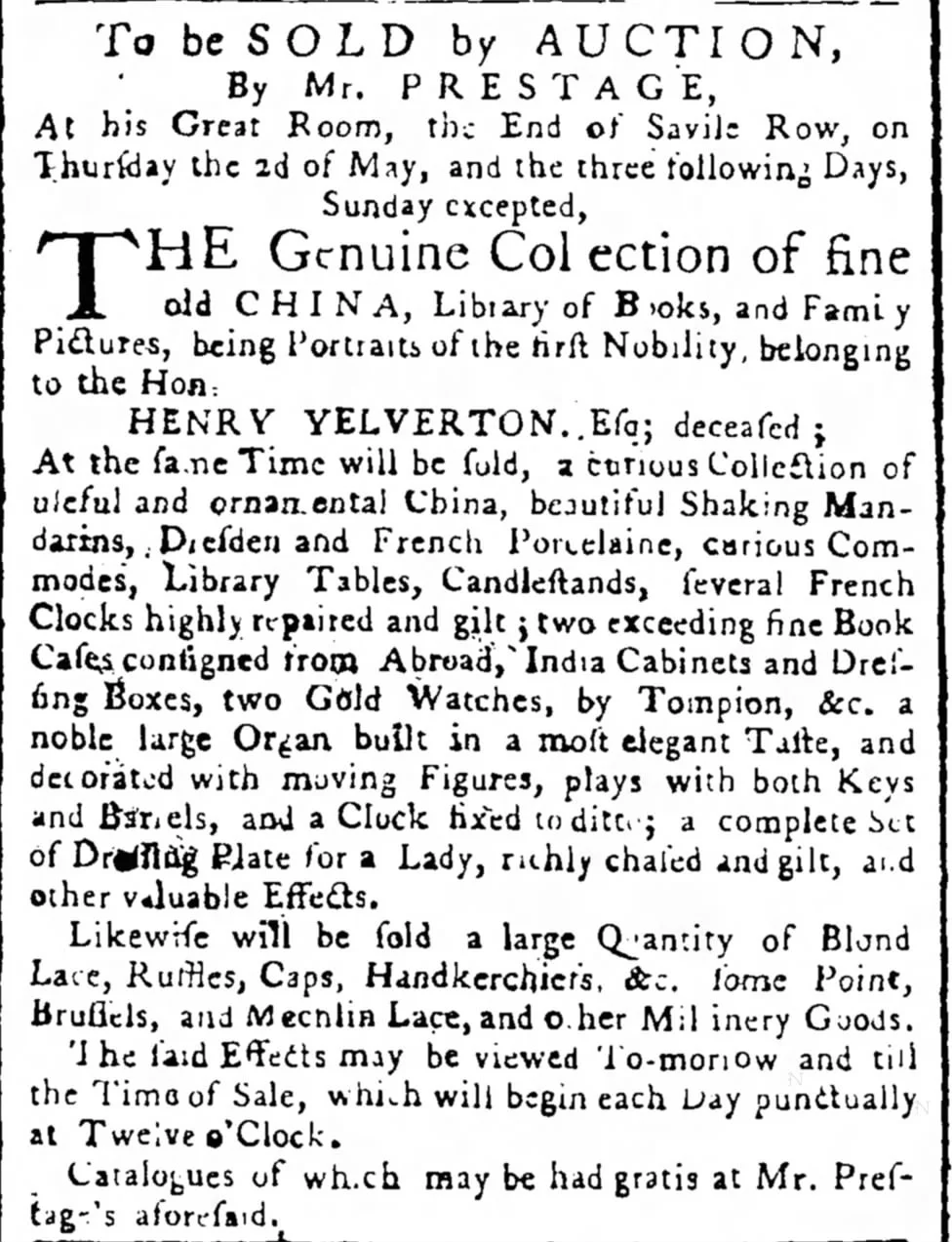

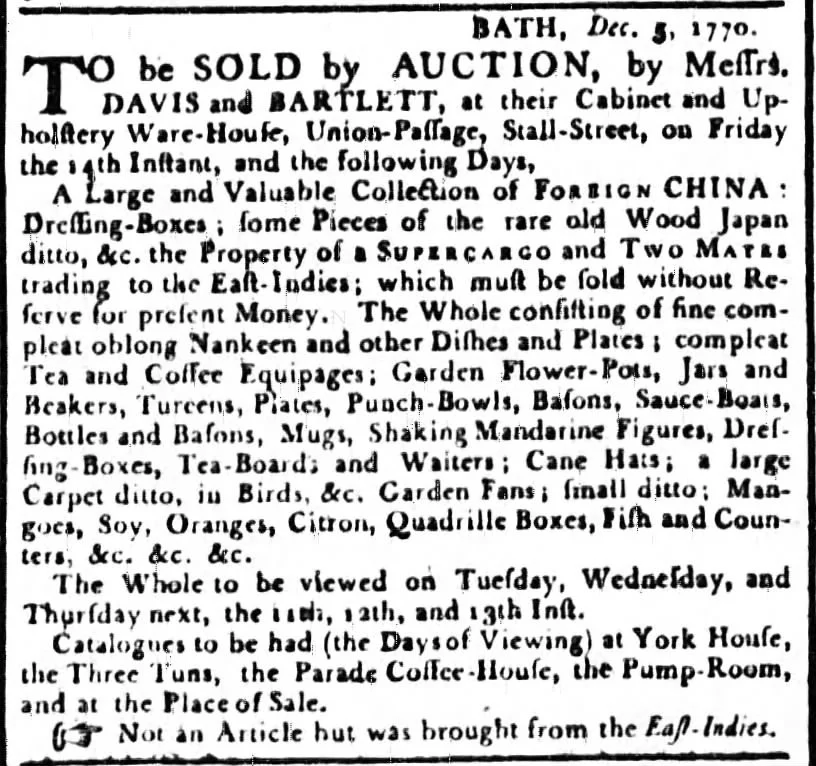
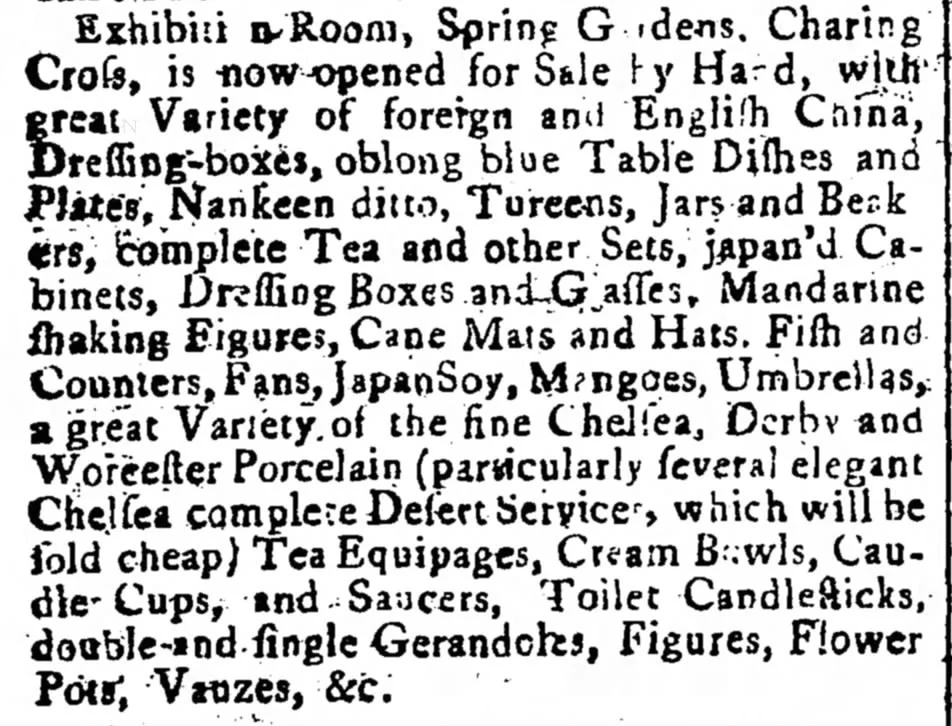
Nodding mandarins in 18th century English interiors
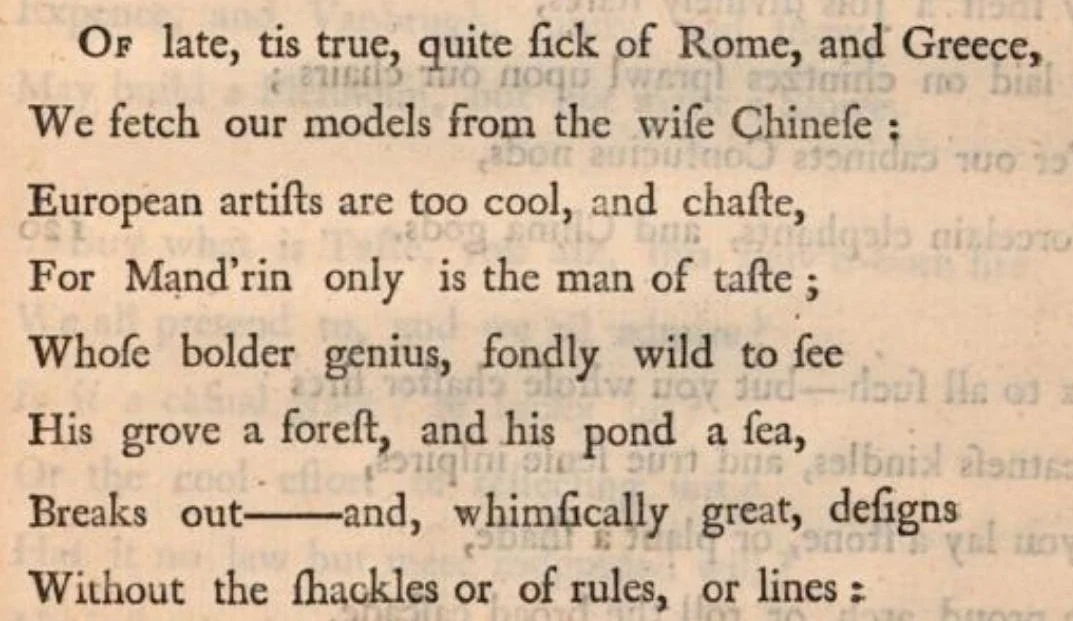
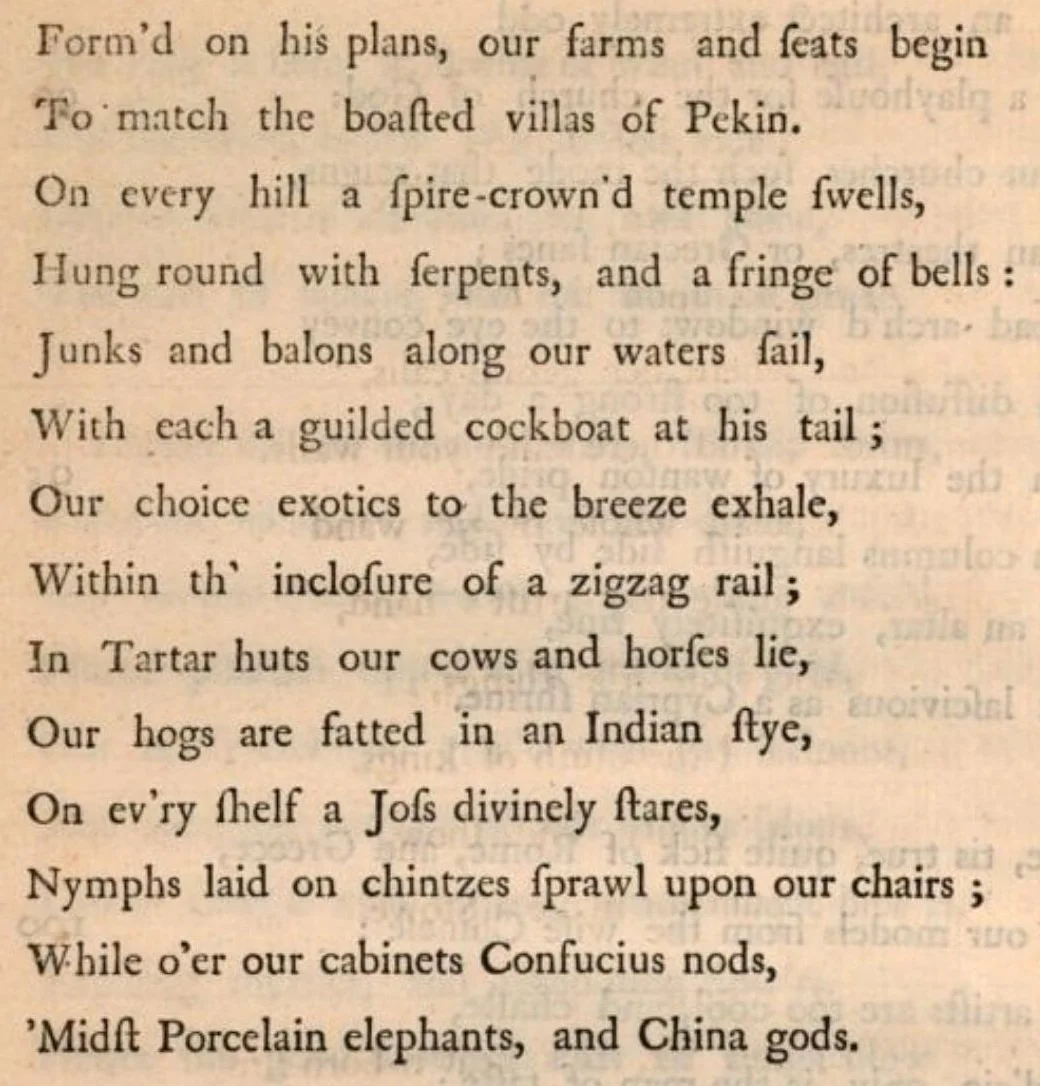
While Chinese nodders were an element of the fad for chinoiserie in 18th century Europe, they were not universally admired. The Antiquarian Repertory (1775) criticizes their inclusion in anachronistic assortments of decor and antiques, while London and Westminster Approved (1766) mentions them while deriding “a variety of abſurdities produced in building, dreſs, equipage and furniture”:
With the utmoſt refpect to the taſte of the Engliſh Ladies, nothing can be more trifling or ridiculous than to ſee a modern chimney-piece ſet out with joſſes and ſuch horrid monſlers, which. can have no other charms to recommend them than deformity, a high price, and their being the production of a very remote country.
Taste in High Life (or Taste à-la-Mode) by William Hogarth, c. 1742
Marriage A-la-Mode: The Tête à Tête by William Hogarth, c. 1743
Mr. and Mrs. Richard Bull by Arthur Devis, 1747
High Life Below Stairs by John Collet, 1763
Queen Charlotte with her two eldest sons by Johan Joseph Zoffany, c.1765
Love and Opportunity, 1768
Physical Advice, 1784
Ague & Fever, 1788
John Quick and John Fawcett in Thomas Moreton’s The Way to Get Married by Samuel De Wilde, 1796
Love in a Blaze, 1800
Chinese Gallery As It Was, in Illustrations of Her Majesty's Palace at Brighton, 1820
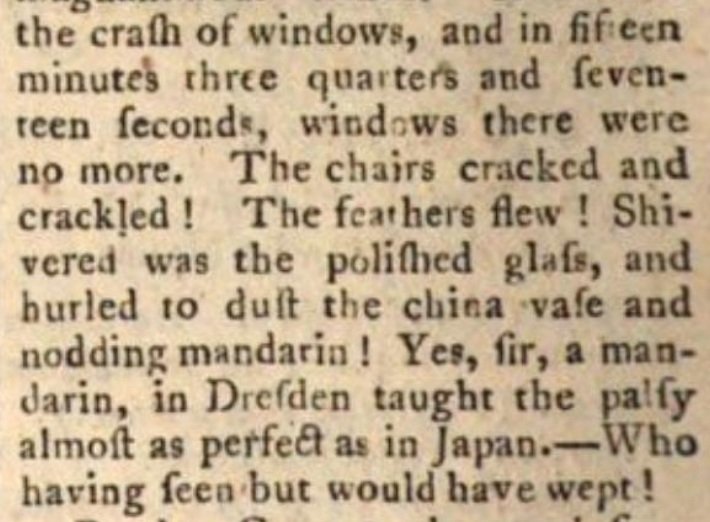
An 18th century comedy, The School of the World, mentions a nodding mandarin made in Dresden.
While nodders made in Europe resembled the figurines imported from China, they were often far cruder in execution, with designs that leaned heavily into grotesque racist stereotypes. (See for example Met 1982.60.325, made in Meissen c. 1760, and MFA 2006.896, made in Chantilly c. 1725-1735.)