Pantin in the 18th Century
The last lines of To the Author of the Receipt for Ladies Dreſs (1753) derides male fashion: “Thus dreſs’d and equipp’d, ’tis plain to be ſeen, / He’s not one jot better than monſieur Pantin.” But who was this Monsieur Pantin?
A better question: what is Pantin?
A pantin was a small puppet-like toy that enjoyed a surge of popularity among English adults in the 1740s and 1750s, especially at social events among the fashionable and well-to-do.
Some pantins were constructed so that their joints would move when a string was pulled, like a modern jumping-jack toy; British Museum 2005,0429.31 is a figure that could be cut out and assembled to form this sort of pantin.
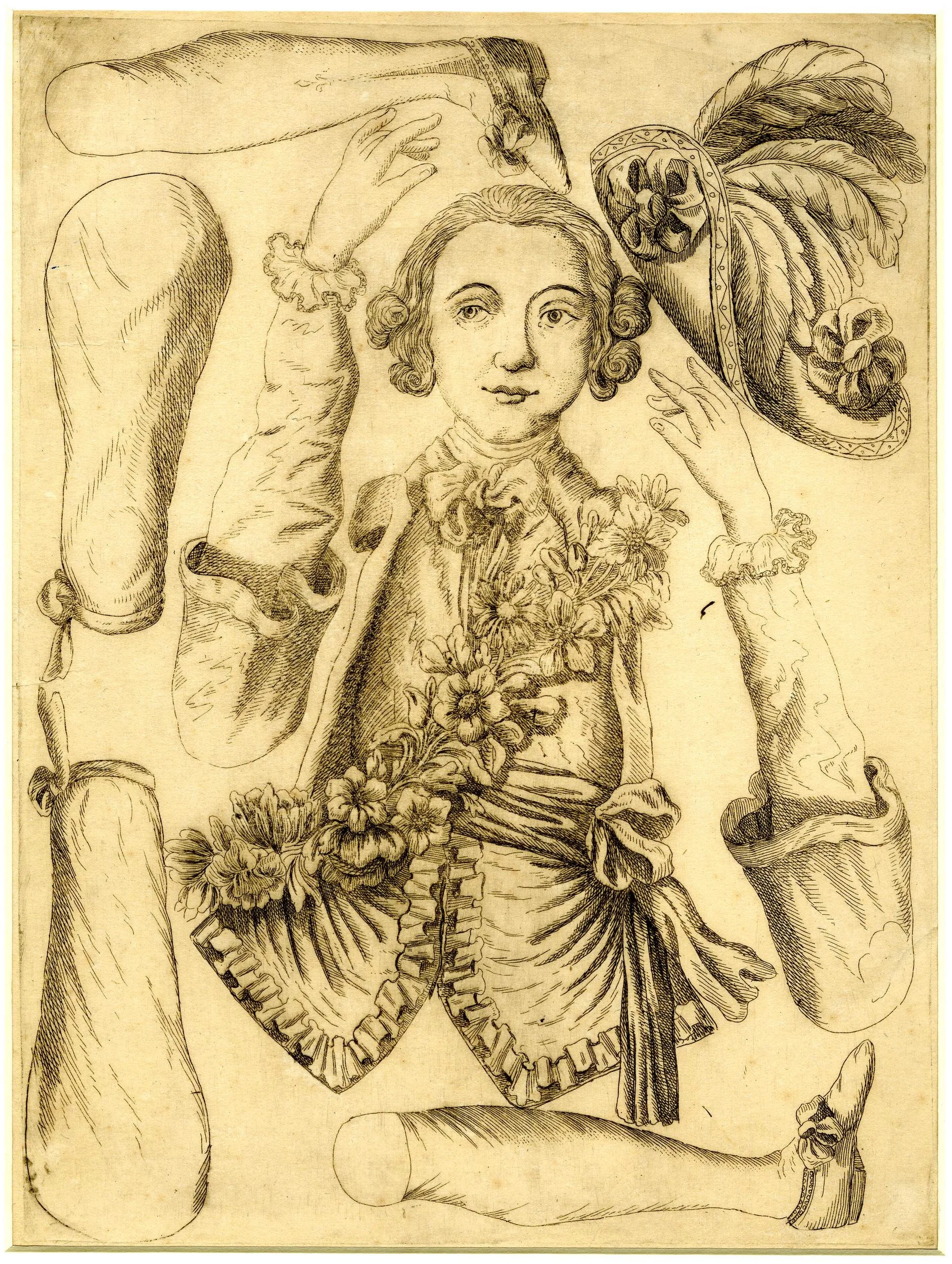
© The Trustees of the British Museum. Shared under a Creative Commons Attribution-NonCommercial-ShareAlike 4.0 International (CC BY-NC-SA 4.0) licence.
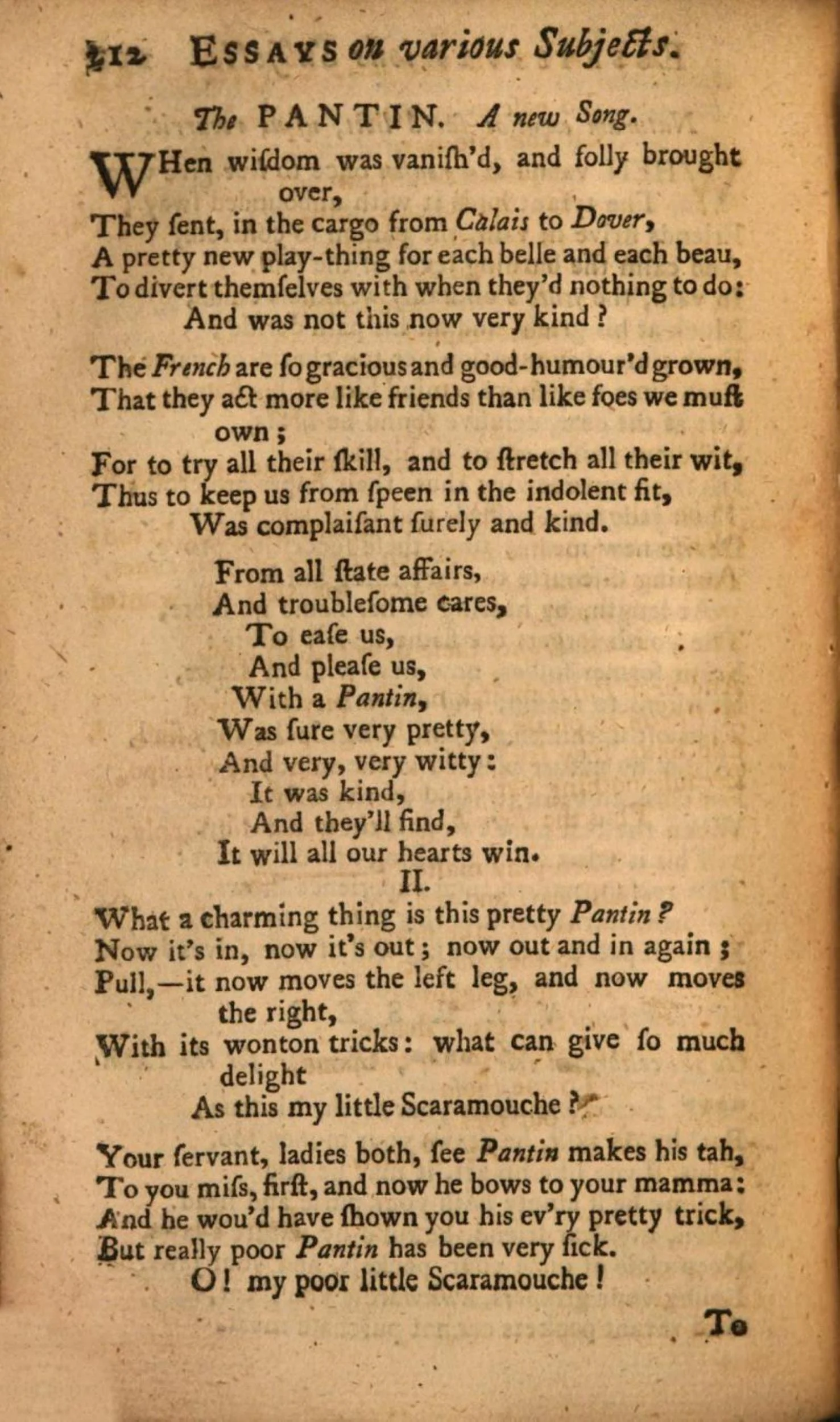
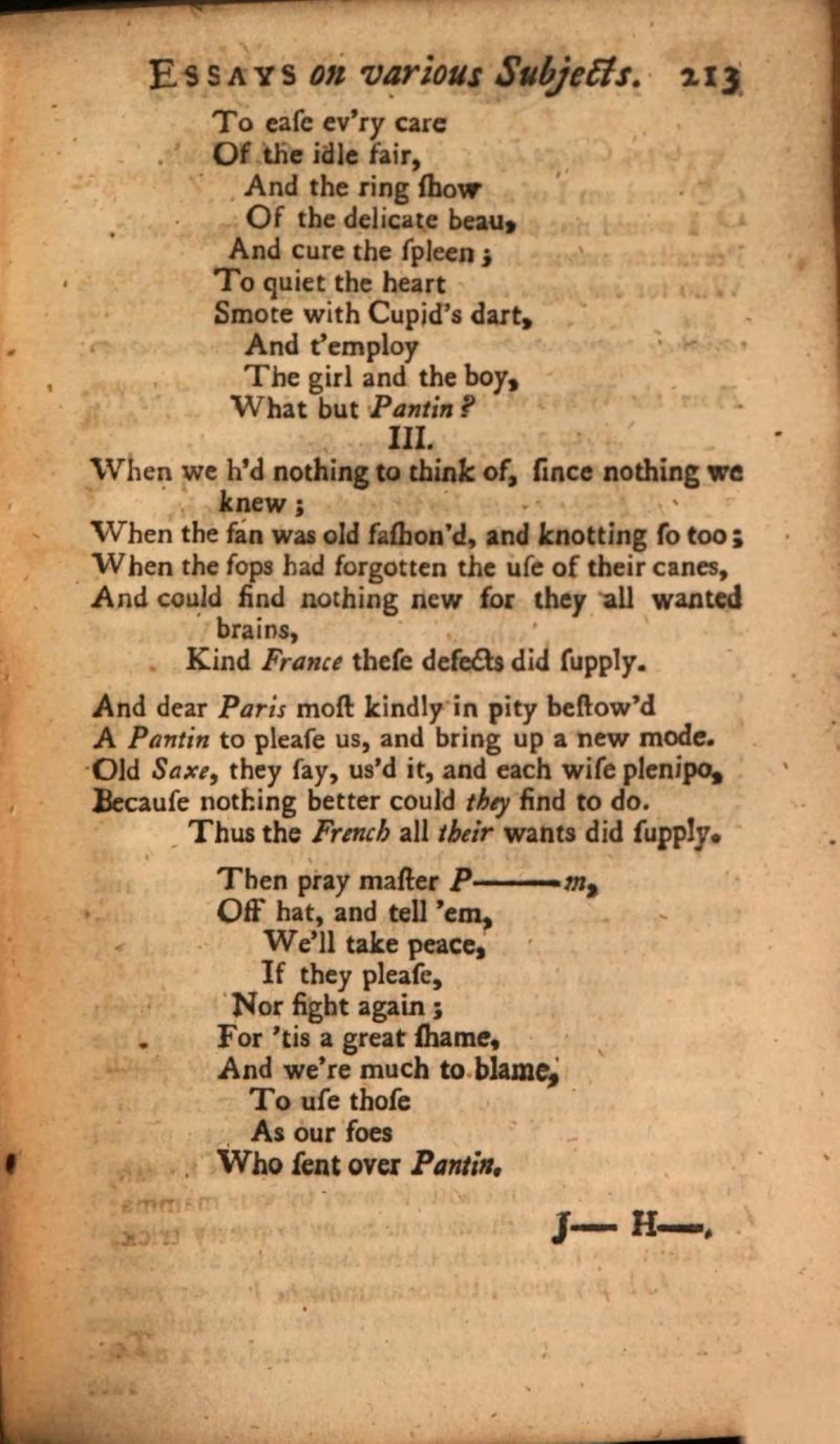
Lady Luxborough’s letters describe pantins and how one plays with them:
The Duke of Newcaſtle Pantin charms me, and I don’t doubt but it made the peace. I am in doubt, when I hear of this polite faſhion, whether it is a mark that the world is returned to its infancy, (as old people grow childiſh) or whether it be not ſome coquettiſh invention, that Mr. Pantin may ſay in dumb ſhow what the Lady who wears him cannot ſay for herſelf. If this ſuppoſition ſhould be thought ſevere upon their reputations, at leaſt it ſaves them from the imputation of folly and childiſhneſs. (May 28, 1748)
At laſt I am in the faſhion, and have got a Pantin. Miſs Patty Meredith writes me word, that ſhe ſends me a Pantin of the neweſt ſort, and that the woman who ſold it aſſured her it was juſt arrived in England, and is reckoned to make as genteel a curtſy as any Monſieur Pantin in Europe. (June 27, 1748)
Two or three days indeed I was kept awake by a viſit from Mr. Meredith, who entertained me with the many gay entertainments he had been a partaker of at London laſt Spring; but when he was gone, I was left alone with Monſieur Pantin, whom, I confeſs, I have not wit enough to amuſe myſelf with; ſo that I ſeldom let him make his appearance, but when Parſon Hall comes; for they ſhew each other to great advantage. (July 20, 1748)
Men and women play with these toys in Pantin a la Mode (1748), an illustration accompanied by a disparaging verse:
When lofty Rome th’imperial Seat of Fame,
Flourish’d in Arts and spread the sacred Flame
O’er distant Climes, Britannia caught the Fire,
And did lke them to Arts and Arms aspire,
Where long it glow’d till Gallic Influence
Bid Foppery rise, and turn’d the Scale of Sense:
Now View that ardour which in every Youth
Seraphic blaz’d, for Liberty and Truth,
Quench’d by the false Delights of Ease and Dreſs,
View it and mourn ye Brave, for who can leſs?
Than weep to see the Follies of the Age,
Nourish’d by Wealth, tho baffled on the Stage.
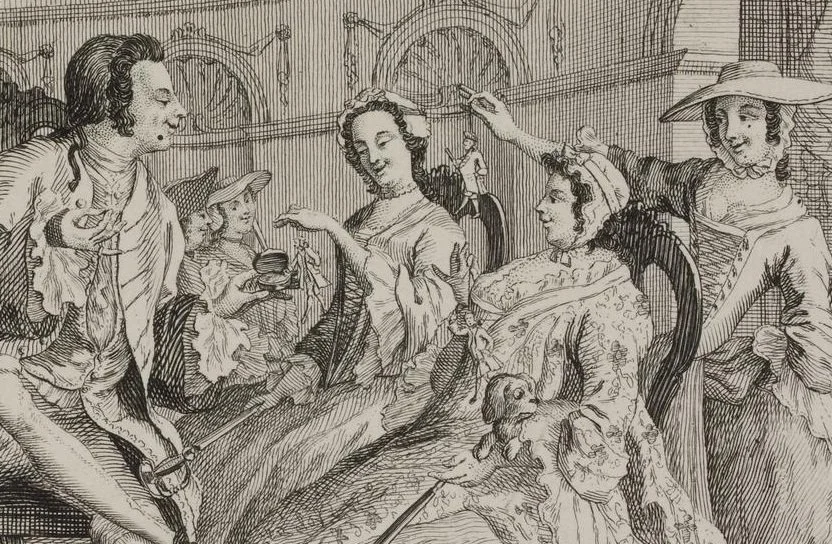
© The Trustees of the British Museum. Shared under a Creative Commons Attribution-NonCommercial-ShareAlike 4.0 International (CC BY-NC-SA 4.0) licence.
Pantins also appear in satirical illustrations, slyly commenting on women who manipulate men as if they were pantins. In A Dutch Toy (1814), Princess Charlotte plays with a pantin dressed to represent the Prince of Orange. The English Ladies Dandy Toy (1818) depicts a young woman playing with a pantin dressed as a dandy.