18th Century Men’s Waistcoats
This page features a chronological index of men’s waistcoats from the 18th century, linking to surviving garments from museum collections worldwide. Trace the design evolution of the waistcoat, from long-sleeved waistcoats of the early 1700s to the shorter double-breasted styles of the 1780s and 1790s.
While sleeved and unsleeved waistcoats are categorized separately, their historical usage overlaps. Style transitions were gradual rather than sudden; however, contemporary portraits and dated original garments provide a baseline for determining the most accurate style options for a specific part of the century.
In L’Art du Tailleur (1769) Garsault tells you how to measure for a waistcoat (and other garments), the parts of a waistcoat with a diagram, and how to make a waistcoat with a pattern.
Pages on related topics: men wearing waistcoats, printed waistcoats, uncut waistcoat-fronts, linen waistcoats, tambour-embroidered waistcoats, and women’s quilted waistcoats.
Additional Resources
This site contains affiliate links for which I may be compensated
L’Art du Tailleur (1769)
Tailleur d'habits et tailleur de corps in Encyclopédie ou Dictionnaire raisonné (1771)
The Taylor’s Complete Guide (1796)
An 18th Century Men’s Waistcoat: diagrams and instructions for fitting and constructing a waistcoat based on an embroidered waistcoat c. 1770
Eighteenth Century Men’s Civilian Waistcoats
Waistcoats From the Hopkins Collection c. 1720-1950
What Clothes Reveal: The Language of Clothing in Colonial and Federal America
Patterns for waistcoats from LACMA: a sleeved waistcoat, c. 1740, made in China for the Western market, and a waistcoat, c. 1750 made in France
Patterns by JP Ryan, Mill Farm (for men and boys)
Embroidery Patterns for Waistcoats
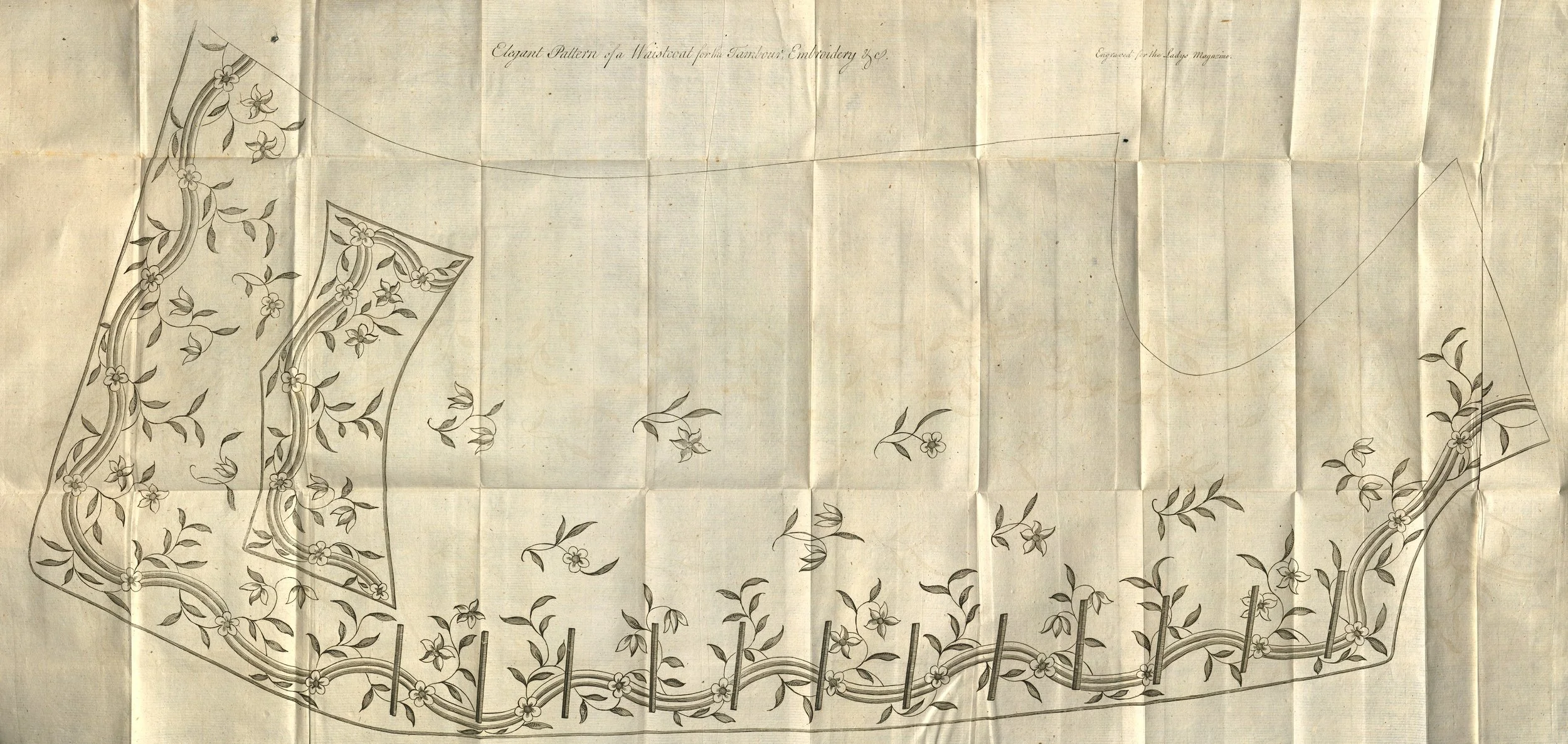
Elegant Pattern of a Waistcoat for the Tambour Embroidery &c.
(The Lady’s Magazine, January 1771)
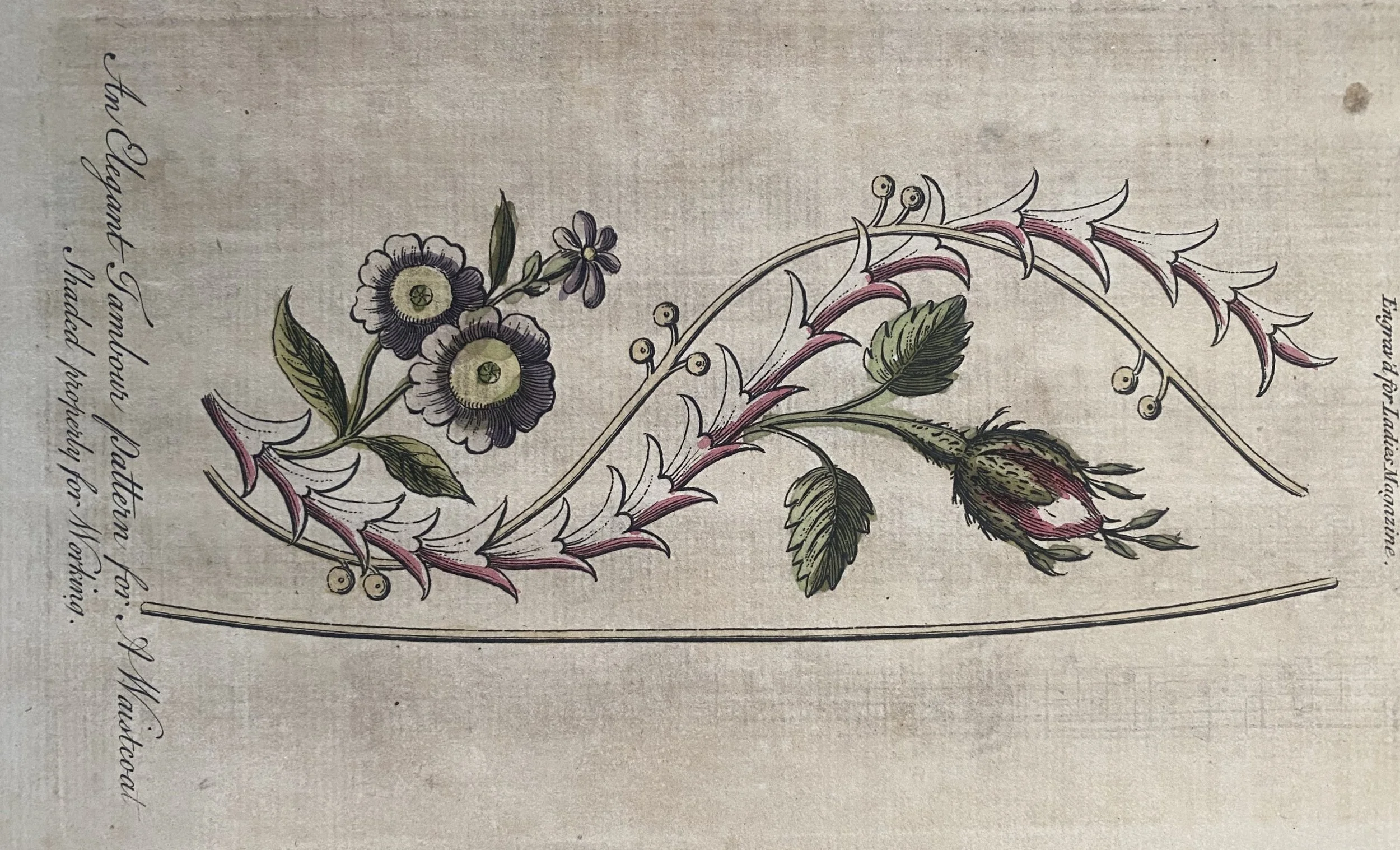
An Elegant Tambour Pattern for a A Waistcoat Shaded properly for Working
(The Lady’s Magazine, April 1772)
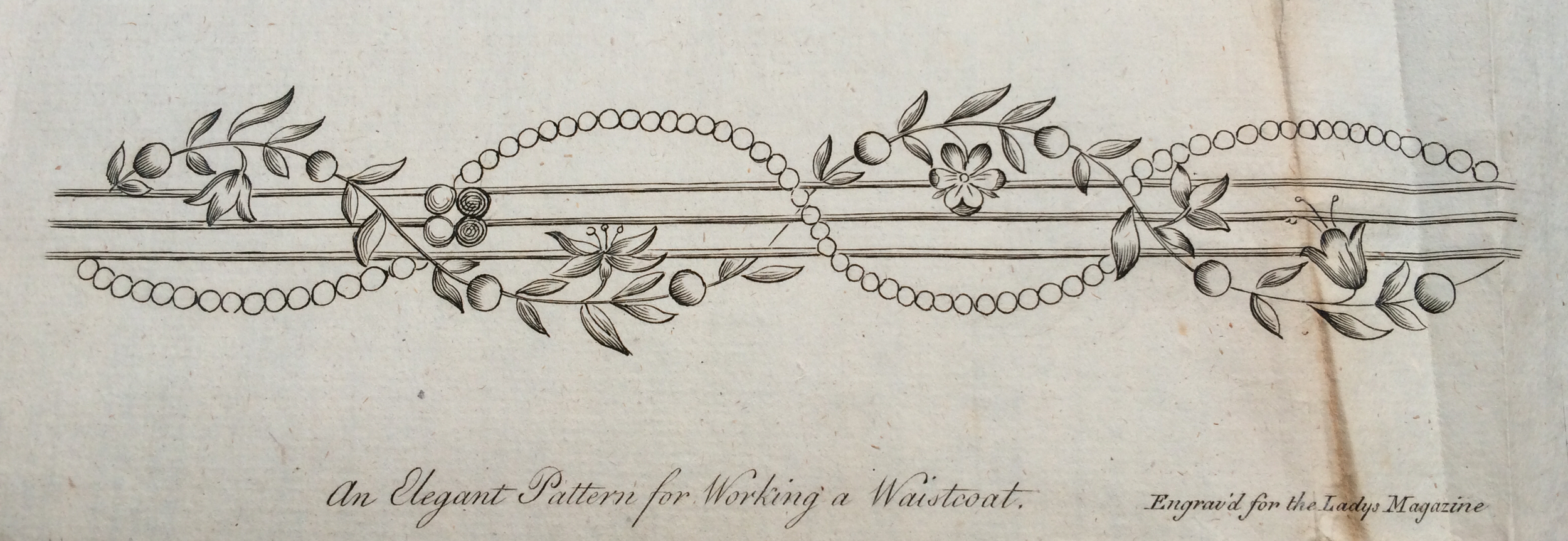
An Elegant Pattern for Working a Waistcoat
(The Lady’s Magazine, March 1775)
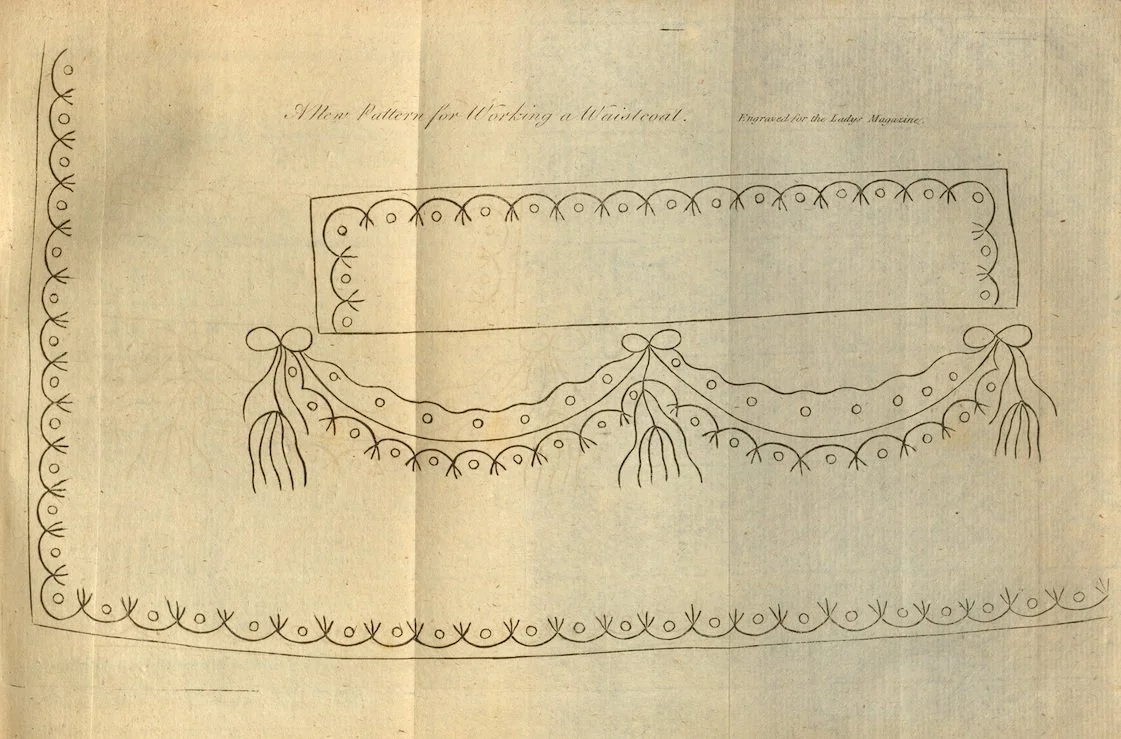
A New Pattern for Working a Waistcoat
(The Lady’s Magazine, October 1785)
18th century sleeved waistcoats
Most sleeved waistcoats were produced in the first half of the 18th century. Some men’s jackets have a similar construction.
Met 1975.34.1, British, early 18th century
Manchester 1961.275, fawn silk brocade with bizarre design, 1705-1715
V&A T.200-1984, silk damask lined with fustian and silk, 1710-1720
Manchester 1953.455, cream satin waistcoat with chenille floral embroidery, 1720-1730
Manchester 2003.169, ribbed silk with metal thread embroidery, 1730-1740
V&A T.72-1951, brocaded silk, England, c. 1734
LACMA M.63.54.2, linen with silk embroidery, England, c. 1720-1755
Met 23.170.4, silk with metal thread embroidery, Britain, c. 1725-1750
LACMA M.2007.211.811, silk faille with silk embroidery, made in China for the western market, c. 1740
Met 1985.140.9, British, c. 1742
V&A T.94-1931, cream satin, embroidered with silk and silver threads, Britain, c. 1745
Manchester 1969.175, cord-quilted linen, 1745-1750
Met C.I.66.14.2, porcelain blue silk brocaded with silver-gilt foliate and appliquéd with polychrome silk, London, 1747
Man's embroidered vest, England
Meg Andrews 8635, light blue silk French damask, Friesland, c. 1750
V&A T.434-1967, figured silk damask, made in England c. 1750-1760
Christie’s Lot 3253 / Sale 4981, a fine waistcoat of white cotton with three-quarter sleeves and elaborate embroidery to the lapels and pockets
LACMA M.67.8.6, embroidered silk taffeta, France, c. 1760-1770
Manchester 1953.103, white twilled cotton with green silk embroidery, 1760-1780
Meg Andrews 8690, quilted waistcoat, c. 1770-1775
The Taylor’s Complete Guide (1796) discusses sleeved waistcoats and their construction, even though they are no longer in fashion: “Though Waiſtcoats of this ſort are not much worn but by oſtlers, poſtillions, grooms, and old men, yet they are a particular kind of practice, and requires much care in the formation; for we uſually ſee as much defect in thoſe waiſtcoats as in any part of the buſineſs; therefore that our learner may avoid error in this matter, we hope he will pay great reſpect to the following method of meaſuring, cutting, and making, as the only means of accompliſhing this arduous taſk.”
18th century waistcoats without sleeves
Killerton National Trust 1361221, 1700; “Cream satin waistcoat. Two pockets with flaps. Sequinned and embroidered border at edges and on pockets.” (I suspect this one is closer to 1770 than 1700, however.)
Met 23.170.5, England, c. 1720
Snowshill Wade National Trust 1349000, 1720-1740; “Waistcoat made from white linen with a lining of fine white linen to the foreparts and coarser linen on the back. It is decorated with corded quilting on the foreparts in a design of stylised flowers. Buttons missing apart from one dorset wheel.”
Manchester 1986.103, ivory brocade silk fronts with unbleached woven linen back, 1740-1745
Felbrigg National Trust 1402247, 1740-1750; “Light fawn woollen man's waistcoat with 10 decorative buttonholes in silver plaited braid, gilt basket-pattern buttons, large pocket flaps with fastening button, and 6 outlined buttonholes, peplum from low waist, part lined. Napped woollen tabby woven cloth.”
Colonial Williamsburg 1991-477, blue silk brocaded to form, England, c. 1740-1755
V&A T.207-1957 in whiteworked cotton, lined and backed with linen, England, 1744
LACMA M.79.85, corded and quilted silk taffeta, c. 1745-1750
LACMA M.2007.211.812, silk cut, uncut, and voided velvet (ciselé) on satin foundation, France, c. 1750
V&A E.381-2019, worn by Edward Curtis, made of brocaded Gros de Tours taffeta, calamanco twill, and fustian, with later alterations,
Christie’s Lot 137 / Sale 5318, a blue grosgrain embroidered waistcoat, first half of the 18th century of pale green silk, mid-18th century
Philadelphia Museum of Art 1908-240, olive-green ribbed silk with chain-stitch embroidery, England, 1740s-1750s
Christie’s Lot 5 / Sale 5572, a gentleman's waistcoat of pale green silk, embroidered with trailing rose-buds on thorny stems, mid-18th century
Killerton National Trust 1361222, 1750; “Cream silk waistcoat with linen back. Fronts embroidered with floral sprays. Trailing floral border and pocket flaps with seqiuned details, 12 buttons and 2 pockets.”
Snowshill Wade National Trust 1349003, 1750-1755; “Waistcoat made from blue silk grosgrain with a blue silk twill part lining with a cream linen back. It is decorated with 45 mm silver lace around part of the neck, front and hem and round and on the pocket flaps.”
Snowshill Wade National Trust 1349004, 1750-1755; “Waistcoat made from red silk velvet with a red flannel back and lined with twilled and tabby silk facings and part lining and a fustian back. The front and hems and round and on the pocket flaps are decorated with applied embroidery in silver gilt plate, purl, jap and sequins. There are 22 silver gilt embroidered buttons.”
V&A T.12&A-1981, a panel of embroidered silk for a waistcoat, France, 1750s (see the uncut waistcoats for additional panels)
Snowshill Wade National Trust 1349002, 1750-1760; “Waistcoat made from gold silk damask lined with cream twilled silk facings and part lining with a cream linen back. It is trimmed with silver lace 10cm deep around the front and the hem and round and on the pocket flaps. The lace is made en disposition. There are 17 buttons embroidered with silver purl and plate.”
Met 2009.300.2839, probably British, 1750-1770
Met C.I.46.9.6, British, third quarter of the 18th century
Bonham’s Lot 1036, Sale 17555, a Continental embroidered silk gentleman's waistcoat, worked with scrolling floral silk embroidery and sprigged with sequins along to the center front, hem and pockets, with embroidered covered buttons and a woollen back
Manchester 1956.203, green silk with brocaded border design, 1755-1765
Ormesby Hall National Trust 709706, 1759-1761; “Cream twill silk long waistcoat embroidered with flowers and foliage using silk threads and silk ribbon in pink, green blue and beige. Also spangles with eleven buttons, silver fabric and linen backed.”
Meg Andrews F168, damask waistcoat with gold buttons, c. 1760
Newport Historical Society 42.1.2, white cotton twill waistcoat with embroidered front, lined with linen
LACMA M.2007.211.813, cotton plain weave with cotton corded quilting, possibly England, c. 1760
V&A 894-1864, brocaded silk with gold embroidery, probably worn as formal court dress, England, 1760s
Philadelphia Museum of Art 1908-242, ivory ribbed silk with embroidery, England, 1760s
Sunnycroft National Trust 1320639, cream satin, 1760-1769
Meg Andrews 7998, embroidered Imperial yellow satin made for Western export, 1760s
Dudmaston National Trust 814796.1, silver/gold brocade, 1760-1770
LACMA M.83.108.6, silk and metallic thread brocade on silk faille ground, France, c. 1760-1770
Philadelphia Museum of Art 1965-17-2, silk satin with embroidery and sequins, England, France, or America, 1760s-1770s
Philadelphia Museum of Art 1899-314, chartreuse silk satin with silk and chenille chain-stitch embroidery, France, 1760s-1770s
Manchester 1962.222, 1760-1780; “Fine machine knitted silk in horizontal stripes of brown and white with less red and green, lined linen. Front in one section each side of fastening to round neck with 12 matching silk thread-covered buttons. Front cut away and sides sharply flared below waist. Slanting pocket with welt each side below waist; edges faced twilled silk; linen back in two sections, seams open below waist.”
Manchester 1952.357, court waistcoat in white satin, embroidered in silks and chenille, worn by Sir John Thomas Stanley, 1770-1780
A man’s waistcoat, c. 1770-1780, in Fitting & Proper: “dark yellow (gold) silk taffeta, lined with beige linen”
Philadelphia Museum of Art 1940-13-6, silk taffeta with tambour embroidery, France (worn by Francis West), c. 1770-1780s
Manchester 1983.619, 1770-1775; “cream cotton roller-printed with all-over pattern of tiny random purple dots (stormont print). Front edges, side seams, buttons and pocket edges printed with "embroidery" of tiny blue pansies, red rosebuds and yellow scalloping. Purple "chainstitching" outlining pocket flaps and front edges. Collarless, buttoned to neck with 13 buttons. Bottom edges cut away towards skirts. Three vents, centre, back and side seams. Back and lining of linen.”
Meg Andrews 8690, sleeved quilted waistcoat, c. 1770-1775
DAR 56.24, an embroidered silk satin waistcoat said to have belonged to Major General Joseph Warren, 1770-1775
Gentleman’s waistcoat, c. 1775 in embroidered silk
LACMA 62.28, sequin, bullion and paste embroidery and cloth-of-silver on silk, France, c. 1775-1785
Snowshill Wade National Trust 1349012, 1775-1785; “Waistcoat made from champagne ribbed silk with a cream wool twill back. It is lined with cream silk twill facings and cream linen. Trimmed with embroidered flower garlands and running designs in pink silk and green sequins on the leading edges and hem of foreparts and pocket flaps. It fastens with 13 buttons embroidered in pink and green silks, silver sequins and purl.”
Snowshill Wade National Trust 1349019, 1775-1785; “Waistcoat made from black panne velvet with a black wool twill back and with black silk twill facings and part lining. The back is lined with cream fustian. It fastens with black silk death's head buttons.”
Philadelphia Museum of Art 1940-13-5, ivory silk taffeta with satin-stitch silk embroidery, France (worn by Francis West), c. 1770-1790s
Philadelphia Museum of Art 1991-75-27, tan linen waistcoat with silk embroidery, made in America in the late 18th century
Christie’s Lot 302 / Sale 5422, a gentleman’s waistcoat of cream silk satin embroidered with tulips and edged in blue silk ribbon, late 18th century
Newport Historical Society 42.1.10, “Double breasted deep cream color sleeveless waistcoat, two pockets, twenty-five buttons down front”
Met C.I.40.112, American or European
Manchester 1987.88, double-breasted dimity with embroidered belt effect, 1780-1785
Colonial Williamsburg 2019-121, England, c. 1785; “made from a broadcloth and faced in a matching twilled shalloon. The back of the waistcoat is made from a poor-quality linen and the lining from a heavily napped fustian. The waistcoat has a standing collar and silver metallic lace running down the front and hem and around the welted or cross pockets. The most notable thing about the waistcoat is the extreme alteration that took place on the side seam, making it nearly 1/3 larger than the first making of the garment.”
Manchester 1953.448, rose-pink satin figured waistcoat with floral design in cut and uncut velvet, pearl button fastenings, 1785-1790
Historic New England 1988.156, c. 1785-1805
Historic New England 1953.319, c. 1785-1805
Historic New England 1923.817, c. 1795-1815
LACMA M.59.23.2, silk floral embroidery on silk faille, England, c. 1780
Meg Andrews 1046, waistcoat from the family of Thomas Crewe Dod, England, c. 1780; “The high stand up collar above small revers, double breasted, ten sets of buttons, straight pockets, of white horizontally striped cotton, the front, and lower section, as well as the pockets embroidered with old yellow and ivory serpents reaching to eat the apples hanging from the leafy meander, embroidered in dense green silks and silver wrapped silk thread, the buttons embroidered with a green and silver central and outlined in yellow and silver. lined and backed with linen with two linen ties.”
FIT 93.132.4, a silk brocade waistcoat with metal thread embroidery, c. 1780
Waistcoat of Col. William Ledyard, striped linen, worn in 1781
Philadelphia Museum of Art 1940-13-7, striped silk satin, France (worn by Francis West), 1780s
Philadelphia Museum of Art 1899-315, silk with gilt-foil weft floats and embroidery with sequins, England or France, 1780s
Philadelphia Museum of Art 1959-34-1, ivory silk satin with silk embroidery and silver sequins, England or America, 1780s
Philadelphia Museum of Art 1955-30-28, tan cotton, Philadelphia, 1780s
Philadelphia Museum of Art 1943-17-7, ivory silk satin quilted to white linen, with tambour embroidery, America, 1780s
Snowshill Wade National Trust 1349026, 1780-1790; “Waistcoat made from ivory silk satin with a cream wool twill back. There are cream silk facings and the skirts are lined with silk twill and the rest with cream linen. It is trimmed with multicoloured silk embroidery of running sprays of flowers down the leading edges, pocket flaps and collar. There are individual flowers overall. The buttons are silk covered and embroidered.”
Snowshill Wade National Trust 1349020, 1780-1790; “Waistcoat made from green ribbed silk with a sage green wool twill back and ribbed silk skirts. It is faced and part lined with green silk twill with a linen back. It fastens with plain green silk covered buttons.”
Snowshill Wade National Trust 1349022, 1780-1790; “Waistcoat made from cream ribbed silk with a cream silk twill back. It has cream silk twill facings and part lining and a cream linen back. It is embroidered all over with silk in a design of flowers and scales in lilac and green. The foreparts and pockets are embroidered in matching round wire braid. The original buttons are silk covered and embroidered.”
Philadelphia Museum of Art 1943-17-3, ivory silk satin with silver metal-wrapped thread and multicolored silk embroidery in tambour work with bright pink sequins and silver flower-shaped foil, America, 1780-1790s
Philadelphia Museum of Art 1943-17-6, ivory silk taffeta with satin stitch embroidery, America, 1780s-1790s
V&A T.231A-1917, embroidered ribbed silk, France, 1780s-1790s
Manchester 1954.973, cream silk satin waistcoat with floral embroidery and applique circles, 1780-1800
Henry Ford 55.140.68, embroidered taffeta waistcoat, 1780-1820
Henry Ford 96.0.171.8, embroidered silk satin waistcoat, 1780-1820
Henry Ford 35.596.22, twill linen waistcoat, 1780-1840
Philadelphia Museum of Art 1943-17-5, striped silk velvet with chenille and metal-thread embroidery, France (worn by Colonel Tench Francis), c. 1785-90
Philadelphia Museum of Art 1943-17-4, striped silk trimmed with brocaded silk ribbon, America, c. 1785-1790
LACMA M.67.8.4, silk embroidery on silk faille, England, c. 1785-1795
Manchester 1955.255, white cotton waistcoat with white satin stripe, embroidered with bow and tassel design, 1785-1790
Philadelphia Museum of Art 1960-143-1, silk satin with silk embroidery, England or America, late 1780s-early 1790s
V&A T.89-1924, made of silk woven by the Maze and Steer weaving company, 1788-1790
Philadelphia Museum of Art 1943-17-2, ivory cotton twill with gilt metallic thread embroidery in tambour work, America, c. 1790-1795
DAR 1430, silk satin waistcoat with mock pocket welts and double-breasted center front, embroidered in serpentine with foliage, worn by Thomas Rumrill at his 1793 wedding in Roxbury, Massachusetts
Philadelphia Museum of Art 1956-29-18, linen with gilt-thread embroidery, England or France, 1790s
DAR 56.19, waistcoat in off-white ribbed silk with striped ground pattern, embroidered along the front and waist edges with chain-stitched floral sprays, 1790-1800
Christie’s Lot 103 / Sale 5318, a gentleman's waistcoat embroidered with floral borders, probably Italian, 1790s
Philadelphia Museum of Art 1906-113, ivory silk satin with silk and chenille embroidery, France, c. 1790-1800
Philadelphia Museum of Art 1930-76-1 and Philadelphia Museum of Art 1930-76-2, ivory silk satin with tambour embroidery, England or France, c. 1790-1800
Meg Andrews 8327, linen waistcoat with tambour embroidery in a guiloche design, 1790s
Chastleton House National Trust 1430632, 1790-1810; “A double-breasted waistcoat, the front of brocaded silk with a design of polychrome floral sprigs, the lining and back of white cotton.”
LACMA M.73.33.3, silk satin, France, c. 1790-1825
Philadelphia Museum of Art 1940-13-2, checkered ivory silk with silver-thread twill tape, France (worn by Francis West), c. 1795
Philadelphia Museum of Art 1936-7-7, brown printed cotton twill, America, c. 1795-1805